U.S. Set to Miss U.N. Human Rights Review for First Time, Raising Accountability Fears
November 10, 2026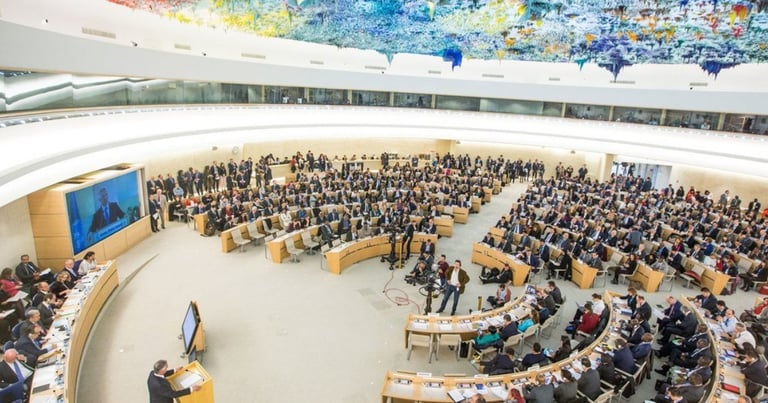

The United States is poised to become the first country to miss a full review of its human rights record under the U.N. Human Rights Council’s Universal Periodic Review, after the Council postponed the session planned for November 2025 in hopes of securing U.S. participation.
The process examines all 193 U.N. member states, usually every four to five years, through national presentations, questions and recommendations; the Council says it cannot conduct a review without representatives of the country concerned.
After Donald Trump returned to power in January 2025, his administration ended cooperation with the Council, which the State Department has described as an irredeemable body that mocks human rights; the administration has also cited alleged anti-U.S. and anti-Israel bias.
The withdrawal marked the second time Trump had taken the United States out of the Council; the first was in June 2018, and President Biden reinstated the country as an observing member in February 2021.
The planned review would have considered issues including abortion and the death penalty, alongside concerns raised in nearly 200 submissions from U.S. and international nongovernmental organizations, including on migration and racial discrimination.
Civil-society organizations filed a record 155 reports on the United States in 2025, with 60 updated in April 2026 to document alleged new violations; the ACLU and allied groups want their findings presented at the March 2027 session regardless of U.S. participation.
The missed review removes a U.N. process that rights advocates describe as a last resort for people harmed by human rights violations, with one activist calling the situation “a crisis of accountability.”
Rights advocates criticized the U.S. absence, with Jamil Dakwar of the American Civil Liberties Union saying attacks on fundamental rights and civil liberties were unprecedented in generations.
Civil-society groups urged other countries and the Council to respond more firmly, including by investigating potential violations, although the U.N. has no concrete sanction for the U.S. boycott.
The International Service for Human Rights called for an immediate response, including a dedicated Council debate on U.S. non-cooperation and a U.N. Human Rights Office report on the country’s human rights situation.
Critics warn that allowing the United States to opt out without consequences could undermine the review’s universality, encourage other governments to avoid scrutiny and leave concerns about U.S. rights without adequate examination.
The European Union and other supporters say every country should face international scrutiny; EU envoy Simone van der Post regretted that the United States declined to take part.
Summary based on 22 sources
Get a daily email with more World News stories
Sources
NPR • Nov 10, 2026
U.S. boycotts U.N. human rights review for second year running
CBS News • Nov 10, 2026
U.S. set to become first nation to refuse a U.N. Human Rights Council review
AP News • Nov 10, 2026
US set to shun a UN Human Rights Council review | AP News
U.S. Representative Jim McGovern • Nov 10, 2026
McGovern and Raskin Condemn Trump Administration’s Withdrawal from Human Rights Accountability Mechanism