Democrats’ Midterm Surge Puts Trump’s Iran War—and Economic Fallout—Under Pressure
November 11, 2026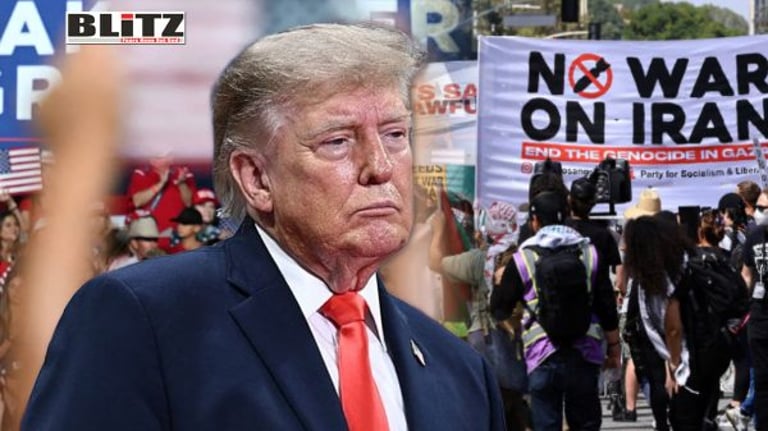

Democrats’ gains in the 2026 midterms dealt a major blow to Trump and the Republicans, with the Iran war emerging as a significant factor in voters’ rejection of the conflict and the era of U.S. “forever wars.”
That outcome marked a sharp reversal for Trump, who campaigned in 2024 as an anti-war candidate and promised to end conflicts, a message that also appealed to Arab and Muslim American voters dissatisfied with the Biden administration’s support for Israel.
Opposition to an attack on Iran was already broad before the conflict began: a January poll found 70% of voters opposed it, compared with 72% support for the Iraq war in polls more than two decades earlier.
NBC exit polling underscored the war’s political impact, finding that 74% of voters considered it a crucial or major factor in their congressional vote and 63% said taking military action against Iran was the wrong decision.
The author argues that Trump failed to make a strong case to the public or Congress that Iran posed a threat warranting war, leaving voters to punish him and Republicans for entering another open-ended conflict.
Iran retaliated by damaging energy infrastructure in Gulf countries and largely closing the Strait of Hormuz, a route that had carried more than a fifth of global oil and natural gas supplies each day, helping drive up energy costs.
The conflict has also disrupted trade, investment, tourism and employment, raising living costs in the United States and putting pressure on economies worldwide; an estimate from Moody’s Analytics chief economist Mark Zandi put the cost to the average American household at about $2,000.
The economic strain reflects not only the decision to go to war but also the failure of the United States and Israel to achieve regime change: Iran’s leaders, facilities and military capabilities have been damaged, but the government remains in power and is fighting back.
As Republican losses became clear, Vice President JD Vance blamed the war, high prices and the broader economic fallout, while also pointing to public concern about the country’s direction.
Trump acknowledged on 4 November that the war had largely contributed to Republican losses by pushing up gasoline prices, but defended the attack and said he would do it again to prevent Iran from obtaining a nuclear weapon.
Democrats’ gains in both chambers of Congress, including in traditionally Republican states, have weakened Trump’s political leverage and given Democrats more power over investigations, spending and oversight; they plan to use control of federal spending to challenge continued military operations.
The author sees a negotiated settlement as increasingly possible and argues that successful diplomacy could stabilize the global economy; Trump has said renewed attacks would be highly unlikely if negotiations with Tehran make progress.
Summary based on 3 sources