Seven Straight Elections Have Shifted Federal Power as Voters Reject the Status Quo
November 12, 2026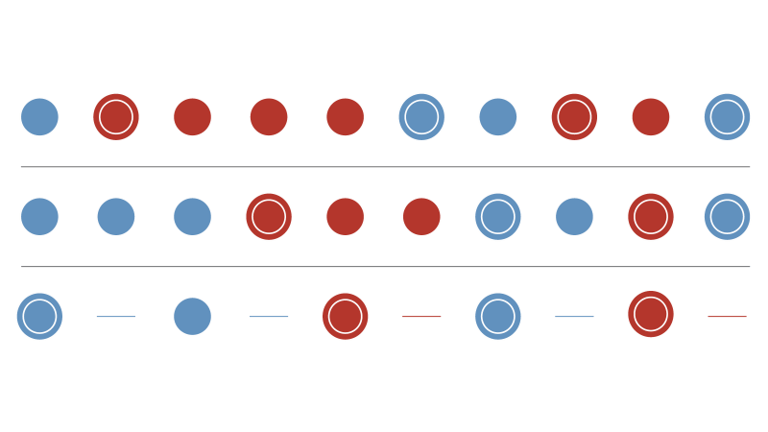

The 2026 midterms extend an unprecedented streak: for the seventh consecutive election, at least one major lever of federal power—the White House, House or Senate—has changed party control.
The broader pattern has been striking since 2000: power shifted in all but two U.S. elections, and in the past seven presidential elections voters chose a president from the other party five times, changed the Senate majority six times and changed the House majority five times.
The only elections this century in which one party held the White House, House and Senate throughout were George W. Bush’s 2004 reelection and Barack Obama’s 2012 reelection.
That volatility contrasts with earlier periods: Republicans gained House seats after 9/11 before losing the chamber in 2006, while Bill Clinton’s party lost it in 1994 and gained seats in 1998 amid public opposition to his impeachment.
Sarah Binder of the Brookings Institution points to the late 19th century as the closest parallel, citing its intense partisanship and ideological divisions; in 1894, Democrats lost more than 100 House seats amid economic uncertainty and a broader realignment.
The recurring turnover reflects widespread dissatisfaction with the country’s direction and a bipartisan sense that the system is “rigged,” fueled by income inequality and the belief that neither party has delivered for people who feel left behind.
Brief periods of unified party control have let recent presidents push major legislation through Senate reconciliation, including Barack Obama’s Affordable Care Act, Donald Trump’s tax cuts and Joe Biden’s Inflation Reduction Act.
Democrats’ 2026 House majority could reach 260 seats or more, potentially making it their largest since the early 1990s and ending decades in which large Democratic majorities were common after World War II.
Another realignment may be coming: Democrats face tensions between democratic socialists and moderates who won in Republican-leaning states, while Trump’s MAGA coalition is described as fractured.
Summary based on 1 source
Get a daily email with more US News stories
Source
CNN • Nov 11, 2026
This is the 7th consecutive change election