Republicans’ Midterm Losses Expose a Crisis in Congressional Checks on Trump
November 19, 2026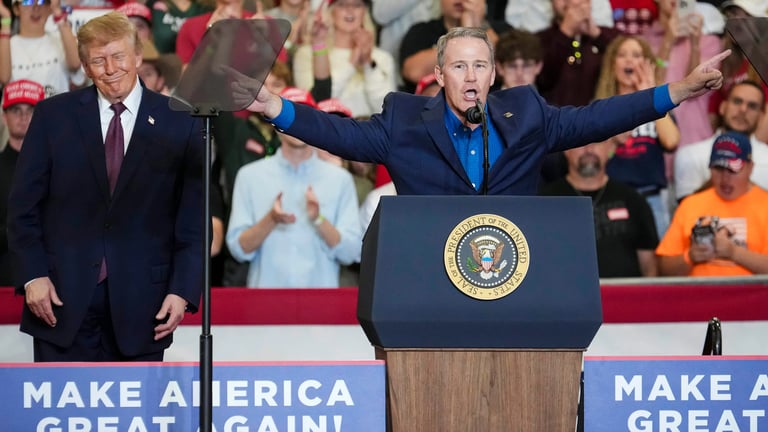

The article argues that the United States is confronting connected challenges at home and abroad, as Republican losses in the 2026 midterms, foreign-policy tensions and questions about institutional checks put pressure on its political stability and international influence.
It says congressional Republicans’ deference to Donald Trump weakened checks and balances and contributed to their election losses.
A Cygnal post-election survey found that 48% of voters viewed their ballot as a vote against Trump’s agenda, compared with 19% who saw it as a vote for it; among Trump’s 2024 voters, favorable views of congressional Republicans dropped from 84% to 73%.
The survey estimated that voters who backed Trump in 2024 but abandoned Republican congressional candidates accounted for roughly six points of electoral margin, with some saying Republicans had failed to govern or strayed from conservatism and the Constitution.
The article says Republicans feared primary retaliation for challenging Trump, citing the defeat of Thomas Massie by a Trump-backed challenger in a May Kentucky primary; at least 30 House Republican incumbents then lost in the general election.
Voters were divided over Congress’s approach: 51% wanted it to work with Trump, including through compromise, while 40% wanted it to check him; the author argues either course requires an assertive legislature.
The losses weakened Trump’s position and complicated his legislative agenda, while Democrats nominated Hakeem Jeffries for House Speaker; a Democratic-led House could scrutinize executive actions but would still need to demonstrate it can govern effectively.
The article says Congress also failed to exercise its war powers during U.S. hostilities with Iran, which proceeded without a declaration of war or authorization; the House voted three times to end the fighting, while a September Senate effort fell one vote short.
Congress’s spending authority was tested when the White House canceled $810 million in previously approved funding; the Government Accountability Office said the cancellation violated budget law, while some Republican appropriators offered only to consider future legislation.
House Republican leaders used procedural maneuvers to avoid votes on Trump’s emergency tariffs until three Republicans joined Democrats in February to end them; the Supreme Court later ruled on the tariffs and emphasized Congress’s constitutional authority over duties.
A dispute over the administration’s attempt to end Temporary Protected Status for some Venezuelan nationals has brought presidential immigration authority and judicial oversight into focus, with the article framing court review as part of checks and balances.
The article’s central argument is that defending Congress’s authority is about constitutional process, not a specific policy position, and that Republicans feared Trump’s political influence more than the voters who ultimately removed them from office.
Summary based on 2 sources
Get a daily email with more US News stories
Sources
Nashville Tennessean • Nov 19, 2026
Republicans gave Trump their power and voters made them pay | Opinion
Modern Ghana • Nov 20, 2026
America Today: The Battle For Political Power, Global Influence And The Future Of The International Order