U.S. Support for Israel Faces Growing Strain, but Military Aid Is Unlikely to End Soon
November 24, 2026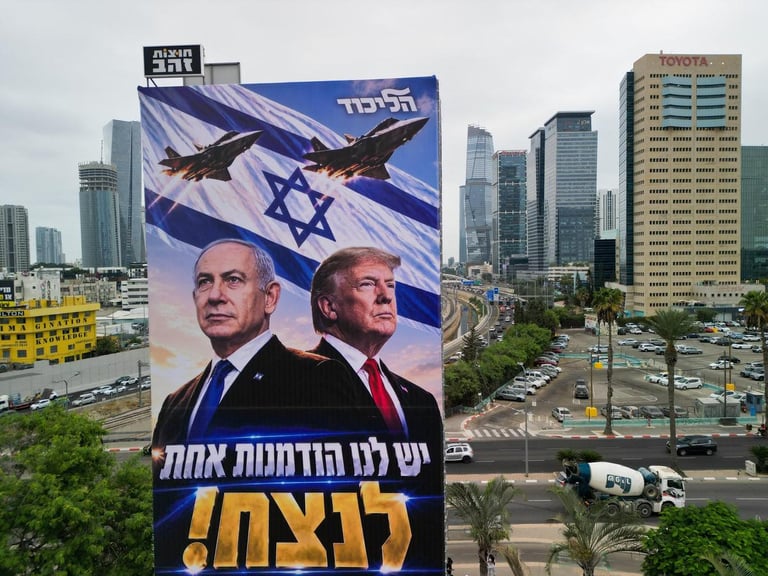

U.S.-Israel relations are under growing strain as American support for Israel declines, though the shift remains far from ending military backing or fundamentally changing policy.
The tension was underscored on November 3, when Donald Trump said annual U.S. military aid to Israel would end at year’s close under an agreement he said he had made with Benjamin Netanyahu. Congress controls appropriations, however, so Trump cannot unilaterally end the funding; the $3.8 billion annual package is part of a 2016 agreement covering 2019–2028, and Netanyahu said Israel could buy U.S. weapons itself.
The announcement came on midterm election day and was presented as an effort to limit political damage as anger grows over Israel’s conduct in Gaza and Trump’s support for Israel and praise of Netanyahu.
The political backdrop is a sharp shift in public opinion: nearly half of U.S. voters now say the country is too supportive of Israel, triple the share in 2017, and earlier in 2026 more Americans said they empathized with Palestinians than with Israelis.
Other polling found 55 percent of Americans consider U.S. military aid to Israel excessive, including 29 percent who favor ending it and 26 percent who favor reducing it; a separate survey found 29 percent viewed Israel favorably and 59 percent unfavorably.
Support is especially weak among young people, while some Republicans have also grown more critical, blaming Israel for drawing the United States into an unpopular war with Iran and contributing to rising living costs.
Democratic lawmakers are increasingly willing to challenge Israeli policy: in April, 40 of 47 Democratic senators opposed selling bulldozers to Israel, and in September, 46 of 47 backed a measure requiring a report on Israeli settler or security-force killings of American citizens in the West Bank, though it failed.
That shift does not mean most Democrats oppose Israel’s security: Chuck Schumer and Hakeem Jeffries remain supportive, though Jeffries has called for changes in the relationship, and moderate pro-Israel Democrats’ election victories constrain more critical factions.
An Israel-based study identifies three Democratic camps: left progressives who want to end military aid, mainstream progressives who support conditioning it on human rights and backing a Palestinian state, and a shrinking pro-Israel establishment that opposes conditions; conditional aid has the strongest momentum.
AIPAC and affiliated groups reportedly spent about $84 million backing pro-Israel candidates in the midterms, but much of the spending was considered ineffective as several outspoken critics of Israel won congressional seats.
J Street’s proposed path would treat Israel like other wealthy allies by selling weapons rather than subsidizing them, while maintaining cooperation on defensive systems such as Iron Dome; suggested conditions include support for parts of the Gaza plan, halting West Bank settlement expansion, and accepting the prospect of a Palestinian state alongside Israel.
A Democratic-led Congress cannot immediately dictate foreign policy while Trump remains in office, but it could scrutinize military aid and press Israel over settler violence, potentially setting up policy changes if a Democrat wins the White House in 2029.
Summary based on 3 sources
Get a daily email with more US News stories
Sources
Al Jazeera • Nov 24, 2026
The ‘eighth front’: Why Israel’s influence war in the US is failing
The Hindu • Nov 24, 2026
A changing Washington, a shift in U.S.-Israel ties
Jacobin • Nov 24, 2026
The US-Israel Relationship Is Shifting. Not Nearly Enough.