Tokyo Court Dissolves Unification Church Over Controversial Practices and Political Ties
March 25, 2025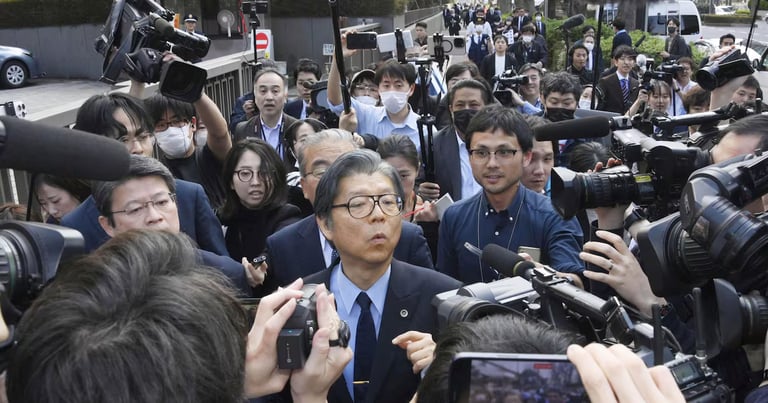

The Unification Church is only the third religious group in Japan to be stripped of its legal rights, following Aum Shinrikyo, which was responsible for the 1995 Tokyo subway sarin gas attack.
The church criticized the court's ruling as a significant threat to religious freedom, claiming it was based on incorrect legal interpretations.
Tetsuya Yamagami, the alleged assassin, cited the church's influence on his family as a motivation for his actions, as his mother donated around 100 million yen to the organization.
A survey revealed that nearly half of the ruling Liberal Democratic Party's lawmakers had connections with the church, contributing to a political fundraising scandal that damaged party support.
Victims of the Unification Church celebrated the ruling, which strips the organization of its tax benefits while allowing it to operate on a volunteer basis.
The investigation into the church was prompted by the assassination of Abe, whose killer reportedly had grievances against the church due to his mother's significant financial contributions.
An internal investigation found that 179 of the LDP's 379 lawmakers had ties to the church, including attending events and accepting financial support.
A Tokyo court has ordered the dissolution of the Unification Church in Japan, citing its controversial fundraising practices and connections to government officials, particularly in the wake of the 2022 assassination of former Prime Minister Shinzo Abe.
The court's decision was supported by over 5,000 pieces of evidence presented by the Education Ministry, which included testimonies from more than 170 individuals who reported being victims of the church's practices.
Lawyers representing victims hailed the court's decision as a crucial step towards justice, calling for an apology and compensation from the church.
The court determined that the church's issues were extensive and ongoing, indicating that voluntary reform was unlikely.
Japan's legal framework historically maintains strict regulations on religious activities to prevent oppression, reflecting lessons learned from past violations of religious freedom.
Summary based on 22 sources
Get a daily email with more World News stories
Sources

The Guardian • Mar 25, 2025
Tokyo court orders dissolution of ‘Moonies’ Unification Church
BBC News • Mar 25, 2025
Japan court orders controversial 'Moonies' church to disband
Time • Mar 25, 2025
Court Orders Dissolution of Unification Church in Japan
CNN • Mar 25, 2025
A court orders the dissolution of the Unification Church in Japan | CNN