EU to Phase Out Russian Gas Imports by 2027, Faces Legal Challenges from Hungary and Slovakia
December 3, 2025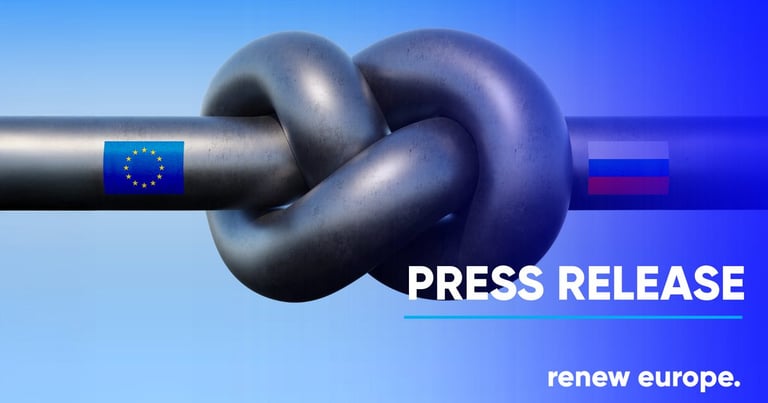

The European Union reached a provisional agreement to phase out imports of Russian natural gas, banning LNG by end-2026 and phasing out pipeline gas by autumn 2027 as part of RePowerEU to end dependence on Russian energy.
Exceptions are planned for landlocked internal market states that can secure gas for two additional months after short-term contracts end.
Russia remains a substantial energy supplier to the EU in volume and revenue, with data showing pre-2022 levels versus current imports and highlighting the broader economic stakes.
Further details and specifics were expected to be announced with more information to follow.
Sources include EU Parliament statements and agency reports, underscoring broader geopolitical and economic implications for Germany and the EU.
Ukraine’s President Zelenskiy was anticipated to comment on yesterday’s Kremlin talks during the EU ministerial meeting, with ongoing updates expected.
Renew Europe representatives voiced support for the agreement, emphasizing energy security and diversification.
Final approval remains needed from EU member states and Parliament, though the agreement enables a formal vote.
The process requires sign-off by the 27 member states and the European Parliament and Council before the regulation becomes law, with ongoing parliamentary scrutiny expected.
The deal hinges on formal approval by the European Parliament and the Council, situating it within ongoing legislative scrutiny.
negotiators announced the deal reached during late-night talks between Tuesday and Wednesday.
U.S. official Marco Rubio signaled progress toward security guarantees for Ukraine, while Russia signaled readiness for war earlier.
The report is dated December 3, 2025, and cites dpa as the source for the policy decision.
The report is presented in a short video format with a concise runtime and a standing timestamp.
Hungary and Slovakia said they would challenge the decision at the European Court of Justice due to energy security concerns.
The agreement reflects heightened EU coordination between member-state governments and the European Parliament in response to Russia's war against Ukraine.
IEA’s Fatih Birol praised the agreement as historic but warned against over-reliance on a single supplier, urging diversification.
Hungary and other states voiced concerns about the economic impact, with broader geopolitical implications discussed by US and Kremlin figures.
Russia criticized the move, warning it would accelerate energy power loss and raise prices.
Hungary and Slovakia previously benefited from exemptions; the new accord removes these exemptions for them.
Finland and Denmark hailed the deal as a major step toward ending Russia-related energy dependence.
Penalties for breaches of the ban can reach up to €40 million, 300% of transaction value, or 3.5% of annual turnover.
Russia and the EU accuse each other of economic consequences and energy insecurity amid the transition, with Russia warning of higher prices.
Key negotiators included Ville Niinistö and the European Commission, with Brussels concessions helping to clinch consensus.
Source is WELT and Axel Springer Deutschland GmbH, framing the piece as a quick news update.
Renew Europe figures underscored reducing dependence on Russia to prevent funding Putin’s war and emphasized a united pro-European majority in negotiations.
Renew Europe highlighted freeing the EU from energy dependency and stopping funding of Putin’s war through imports.
The objective is to create permanent sanctions against Moscow while preserving supply security during disruptions.
A press briefing was planned for 10:30, with a webstream of the events available.
NATO ministers were set to meet in Brussels as the alliance backs Ukraine, with US representation by Deputy Secretary of State in place of Marco Rubio.
The agreement closes non-compliance penalties with harmonized sanctions and tighter proof requirements on country of production for gas imports.
Background notes link the move to Russia’s weaponisation of energy, including storage underfills and pipeline halts used during price spikes.
Hungary, still dependent on Russian gas and oil, rejects the decision and plans to challenge it in court, arguing it jeopardizes energy security.
Viktor Orbán has framed Russian energy as vital for Hungary, influencing opposition to the measure.
Orbán’s government plans a legal challenge, signaling potential legal battles over energy security.
The policy is designed to be adopted by qualified majority voting to minimize veto risk.
Olena Zelenska visited France for diplomacy discussions and highlighted protecting Ukrainian children abducted by Russia.
US-Russia talks on Ukraine territories yielded no binding compromise, with no concrete territorial agreement reached.
Separately, Moscow and Washington did not reach a peace agreement, with Russia signaling readiness for war and no progress on proposals.
EU states can request a four-week suspension of the ban, subject to Commission approval after an assessment.
A source link notes broader regional reporting on the EU vote and implications.
Gas importers of Russian-origin gas must obtain pre-authorization five days in advance via a Commission-managed list.
ANSA reports frame the ban as part of broader efforts to reduce dependence on Russian energy, publicized on December 3, 2025.
The regulation would cement energy independence from Russia and would remain in force regardless of any future peace deals.
ICIS forecasts record LNG imports to Europe next year, with the majority from the USA, while Asian demand and pricing dynamics affect the market.
France’s EDF and Framatome continue business with Rosatom, and formal approval by Parliament and Council is required for full effect.
The decision is framed as permanent EU law, with formal adoption by the Parliament and Council still pending but margins reportedly secured.
Overall, the EU aims to complete its gas sevrage from Russia while balancing energy security and political sensitivities.
Member states must submit diversification plans to the Commission by March 1 and confirm Russian gas contracts or bans, with the Commission issuing recommendations.
Analysts suggest that European gas prices may not rise sharply due to LNG competition and price dynamics, though favorable terms from Russia could alter comparisons.
Summary based on 42 sources
Get a daily email with more World News stories
Sources
Agenzia ANSA • Dec 3, 2025
EU agrees on a gradual ban on Russian gas imports - Politics - Ansa.it
Agenzia ANSA • Dec 3, 2025
EU agrees on a gradual ban on Russian gas imports - Slovenia - Ansa.it