African Penguins Face Extinction as Sardine Stocks Collapse, Urgent Conservation Measures Underway
December 5, 2025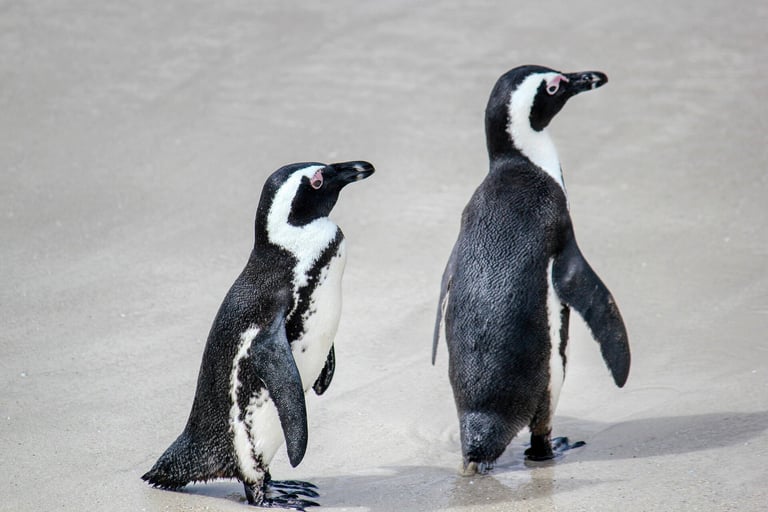


A new study finds that more than 60,000 African penguins starved to death off South Africa between 2004 and 2011 as sardine stocks collapsed and environmental factors intensified the food shortage.
Overall penguin numbers have plunged by about 80% over three decades and the species was declared critically endangered in 2024, with fewer than 10,000 breeding pairs remaining.
The declines are tied to a combination of climate-driven shifts reducing sardine availability and overfishing, with sardine biomass off western South Africa hovering around a quarter of its maximum in most years since 2004.
Conservation efforts include installing artificial nests and establishing new colonies, along with steps to minimize tourism-related disturbances.
Researchers emphasize ongoing monitoring of breeding success, chick condition, foraging behavior, population trajectory, and survival to gauge recovery prospects.
Experts recommend reducing sardine exploitation when biomass falls below 25% of its maximum, boosting adult survival to support spawning, and continuing actions such as artificial nests and predator management.
Fisheries management should cut sardine harvest when biomass dips below 25% of maximum and address juvenile sardine mortality, complemented by regular monitoring of penguin health and foraging patterns.
Conservation implications call for cautious sardine exploitation in low-biomass years, protections for sardine reproduction, and continued measures like artificial nests, predator control, and rescue/rearing of birds.
Dr. Makhado notes the goal of increasing prey access during critical life stages, while independent researchers urge urgent reforms to fisheries management to halt further declines.
To aid conservation, researchers are using penguin decoys—concrete replicas and playback calls—to lure penguins to safer breeding grounds and create colonies in protected, food-rich areas.
Conservation actions include artificial nests, predator management, rescue and hand-rearing efforts, and a recent prohibition on commercial purse-seine fishing around South Africa’s six largest colonies to improve prey access.
Policy measures described include banning commercial netting around the six largest breeding colonies to protect penguin populations.
Recent actions restrict purse-seine fishing near the six major breeding sites to enhance access to prey during critical life stages.
The study analyzed long-term counts of breeding pairs and molting adults from Dassen and Robben Islands (1995–2015), incorporating mark-recapture survival estimates and a prey-availability index based on Cape gannet diets.
These analyses used breeding and molt counts alongside survival data and an integrated prey index to infer sardine/anchovy abundance over time.
Changes in sea temperature and salinity shifted sardine spawning locations, reducing west coast yields while concentrating some spawning on the south coast, with ongoing intense exploitation in the west.
Environmental shifts in temperature and salinity affected spawning success for sardines and anchovies, contributing to prey scarcity and higher western exploitation in the mid-2000s.
Experts say restoring sardine biomass in key foraging zones is essential for the long-term survival of African penguins, which were reaffirmed as Critically Endangered in 2024.
During the 21-day annual molt, penguins cannot hunt on land and must have adequate pre-molt fat reserves, so insufficient prey before or after molt raises mortality risk at sea.
Looking ahead, the outlook depends on environmental conditions affecting sardine spawning, though recent interventions offer cautious optimism for stabilization and potential recovery.
The primary cause is starvation from collapsing food supplies, with sardine stocks staying below 25% of peak abundance, driving severe food shortages.
Authorities have imposed a 10-year ban on commercial fishing around six major penguin colonies to support recovery efforts.
Dassen Island and Robben Island were central to long-term monitoring, housing about 25,000 and 9,000 breeding pairs respectively in the early 2000s.
Cape penguin colonies attract thousands of visitors, but tourism pressure is cited as an additional negative factor for the birds.
Survival and breeder return rates during 2004–2011 closely tracked prey availability, with very high sardine exploitation coinciding with increased mortality.
Adult survival during moult is strongly tied to prey availability, and exploitation spikes—up to 80% in 2006—correlated with elevated penguin mortality.
Experts say these declines reflect decades of mismanagement of small fish stocks and urge urgent, sustained action to protect African penguins and other species relying on small pelagic fish.
Summary based on 6 sources
Get a daily email with more World News stories
Sources
The Guardian • Dec 5, 2025
60,000 African penguins starve to death after sardine numbers collapse – study
The Independent • Dec 5, 2025
More than 60,000 penguins starve to death near Africa after fall in sardine numbers