South Korea's Temple Stay Program Hits Record Attendance, Expands Cultural and Wellness Initiatives
January 18, 2026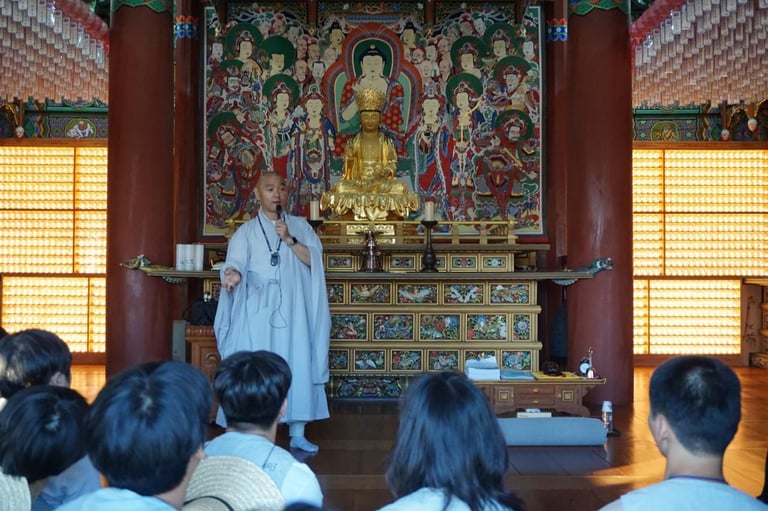

The Temple Stay programme in South Korea reached a record 349,219 participants in 2025, with 293,704 domestic visitors and 55,515 international visitors, marking the largest turnout since its 2002 inception and underscoring growing interest in cultural immersion and wellness travel.
Since its launch, participation has grown from about 2,500 participants at 33 temples to 4.18 million total participants, highlighting substantial expansion in both the number of temples and attendee numbers.
Originating in 2002 to promote traditional Korean culture and provide lodging during the World Cup, the programme has evolved into a major cultural tourism activity with over 4.18 million participants to date.
In 2025, participation rose 5.1 percent from 2024, continuing a steady uptick in this overnight cultural program.
The Jogye Order plans to expand stay-based temple programs linked to local culture and tourism this year, and will introduce tailored meditation retreats to address rising mental stress.
Future initiatives include specialized programs focused on stress relief and mental health, along with inclusive outreach for socially marginalized groups to access tranquil, reflective spaces.
New programs will emphasize stress relief and mental health, and extend outreach to socially marginalized groups to broaden access to wellness-oriented temple stays.
The programme is expected to play an increasing role in Korea’s wellness and cultural-tourism strategy, boosting regional economies and offering meaningful experiences beyond urban centers.
The Jogye Order plans to extend the programme beyond Seoul to leverage cultural and tourism resources nationwide and strengthen regional economic growth through expanded temple experiences.
This expansion aligns Korea with leading trends in cultural and wellness tourism, reinforcing the country’s position as a destination for mindful travel.
Buddhism’s growing popularity in Korea is attributed to factors like a less hierarchical culture and broader outreach, including temple stays for singles and events featuring modern experiences such as electronic dance music.
A Hankook Research survey in November found Buddhism at an average favorability of 54.5 points (out of 100), the highest since monitoring began in 2020, ranking it first among major religions ahead of Catholicism and Protestantism.
Summary based on 4 sources
Get a daily email with more World News stories
Sources
The Korea Times • Jan 18, 2026
Temple stay participation hits record 350,000 visitors last year
korea joongAng daily • Jan 18, 2026
Nearly 350,000 people enjoyed overnight temple stays in 2025
Yonhap News Agency • Jan 18, 2026
Nearly 350,000 people enjoy overnight 'temple stays' in 2025
Travel And Tour World • Jan 18, 2026
South Korea’s Temple Stay Programme Sees Record Participation in 2025, Reviving Cultural Tourism