Outgoing Bangladesh Adviser Proposes Regional Economic Expansion Amid Strained India Relations
February 17, 2026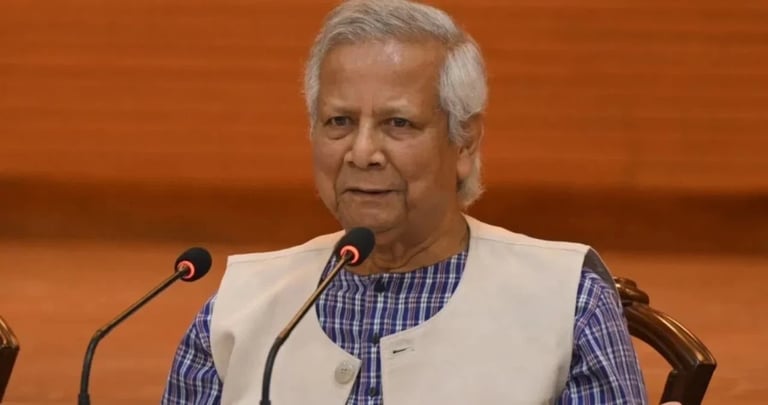

In his farewell address, the outgoing Bangladesh chief adviser proposed expanding sub-regional economic cooperation by tying together the Northeastern Seven Sisters states of India with Nepal and Bhutan, signaling a regional vision that links sovereignty, national interest, and dignity in Bangladesh’s foreign policy.
Yunus argued that Bangladesh had reclaimed sovereignty, independence, and dignity in foreign policy, and he emphasized the coastline as a gateway to the world economy.
He framed his tenure as a reset in external engagement, stressing an open sea as a strategic asset and regional connectivity—with Nepal, Bhutan, and northeastern India—as essential for future growth and development.
Labor opposition criticized the interim administration over minority protection, the democratic transition, and international diplomacy.
Domestically, Yunus defended agreements with international port operators despite protests, noting the government enacted roughly 130 new laws, numerous amendments, and about 600 executive orders, with a large share already implemented, while facing criticism over minority safety and governance during the transition.
Analysts say, despite initiatives, his tenure saw deteriorating relations with India and limited notable foreign policy achievements.
The farewell remarks came amid strained India-Bangladesh ties and as Bangladesh transitions to a new government following elections that brought the BNP to power.
Yunus did not address recent Hindu attacks in Bangladesh, a concern for India and observers, contributing to tensions in India–Bangladesh relations.
Relations with India deteriorated during his tenure due to minority protection and law-and-order concerns, affecting trade and signaling a need to rebalance ties under the BNP era.
The speech coincided with cooling India–Bangladesh relations, with concerns over minority safety and stalled trade talks, and is seen as potentially redefining bilateral dynamics.
Overall, India–Bangladesh ties weakened during his tenure, with frictions over minority protection and trade signaling a shift in regional orientation.
He claimed military modernization and highlighted a sweeping set of reforms—around 130 laws, amendments, and roughly 600 executive orders, with about 84% enacted.
Summary based on 9 sources
Get a daily email with more World News stories
Sources
Business Standard • Feb 17, 2026
Bangladesh no longer a 'submissive country', says Yunus in farewell address
Zee News • Feb 17, 2026
Yunus highlights China ties, Indias 7 Sisters and US trade in exit speech
Economic Times • Feb 17, 2026
Northeast India, China echo in Yunus’ farewell speech as Bangladesh turns a fresh page
Devdiscourse • Feb 16, 2026
Yunus Bids Farewell: Legacy of Sovereignty and Strained Ties