Ukraine's Defense Industry: A Rising Pillar of European Security and Economic Revival
February 25, 2026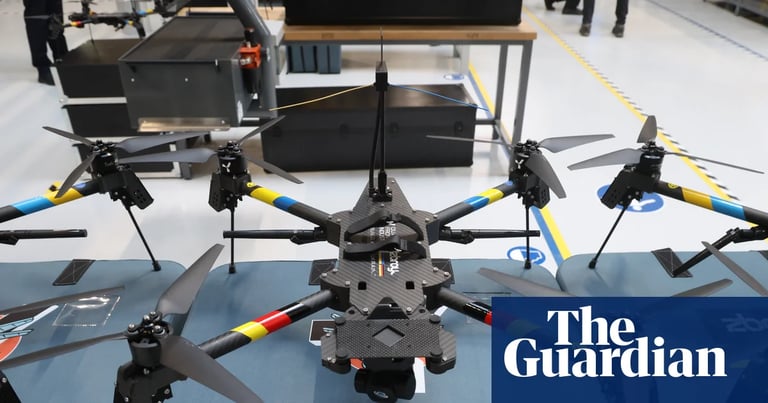


EU trade liberalization, digital market access, and growth in green energy and telecom aid Ukrainian firms, while skilled labor shortages and recruitment pose ongoing challenges.
Postwar planning must mitigate risks to transatlantic unity and European cohesion, suggesting risk-reduction measures, a modern Harmel-style dual-deterrence framework, OSCE revitalization, and a G7 group to coordinate long-term Russia policy.
Humanitarian response requires a flexible, fast grant mechanism that coordinates private capital, NGOs, and UN operations to bridge relief and recovery, avoiding bureaucratic delays and duplications.
Obstacles include governance fragility, procurement transparency gaps, IP protection, insurance, corruption concerns, and the need for NATO/EU-standard certifications to ensure interoperability.
Ukraine’s defense industrial base has evolved from wartime resilience to a cornerstone of Europe’s security and Ukraine’s postwar economy, driven by rapid advances in drones, autonomy, electronic warfare, and battlefield software that require European capital, certification, and integration into NATO procurement to scale.
The DIB is moving from survival to strategic integration, with export centers, coproduction, and EU alignment turning Ukraine into a driver of reconstruction, innovation, and European security.
Ukraine’s DIB is becoming a pillar of Europe’s security and the postwar economy, leveraging drones, autonomy, and battlefield software that must connect to European and NATO procurement systems to scale.
Ukraine’s agricultural sector faced 2025 declines due to port disruptions and EU trade frictions under a broad EU trade agreement, widening the trade deficit even as EU aid helps.
Geopolitical uncertainty over Western support could push investors toward multilateral guarantees, export credit insurance, and risk-sharing, with a shift from grants to commercial off-take agreements embedding Ukraine’s rebuilding in investment-grade frameworks.
Brussels is advancing Kyiv’s EU path through progressive membership, granting growing access to the single market and customs union as benchmarks are met.
US companies, including Boeing, maintain significant Ukraine presence with ongoing investments and a 10-year horizon despite security risks.
Ukraine’s economy is expected to grow modestly in the near term, with projections revised downward to around 1.8–1.9% due to ongoing conflict.
Summary based on 3 sources
Get a daily email with more World News stories
Sources

The Guardian • Feb 23, 2026
‘Progressive membership’: Ukraine’s economic resilience shows future for EU business tie-ups
Council on Foreign Relations • Feb 24, 2026
Securing Ukraine’s Future in Europe: Ukraine's Defense Industrial Base—An Anchor for Economic Renewal and European Security
Council on Foreign Relations • Feb 24, 2026
Securing Ukraine’s Future: Adapting to New Realities After Four Years of War