Wayve Secures $1.5 Billion for UK Robotaxi Launch, Backed by Uber, Microsoft, and More
February 25, 2026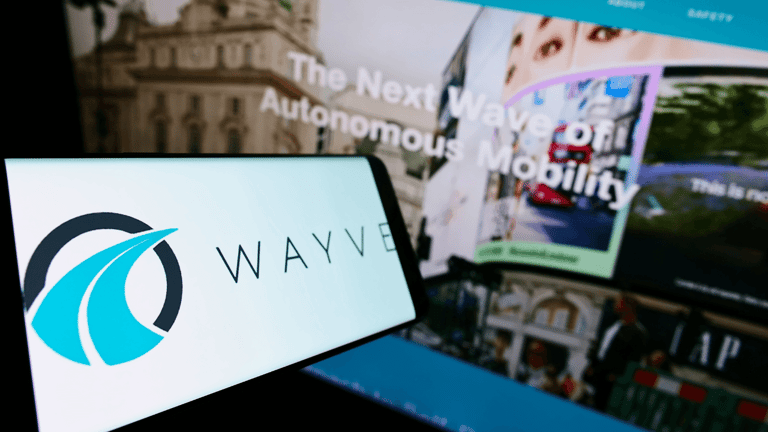


Wayve, the British autonomous-driving company, has secured roughly $1.5 billion in funding ahead of its UK robotaxi launch, with major investors including Uber, Microsoft, Nvidia, Mercedes-Benz, Nissan, and Stellantis.
Wayve’s hardware-agnostic strategy enables its software to work with any sensors and existing automotive chips, easing integration for partners.
CEO Alex Kendall says the AI driver is designed to be generalizable and adaptable across different cars, sensors, and road rules without extensive city-specific data or HD maps.
Nvidia has a long-standing development relationship with Wayve and participated in this round, though the exact investment amount was not disclosed.
Wayve’s approach contrasts with Waymo and Tesla: it does not operate its own hands-off systems or build vehicles, but licenses its AI stack to automakers and partners to scale across OEMs and geographies.
Tesla is noted as a fellow actor in autonomous mobility, but its progress to robotaxi deployment trails Wayve’s current trajectory.
The content reflects the author's viewpoint and should not be relied upon for investment decisions.
Wayve’s technology relies on end-to-end deep learning that does not require high-definition maps and can run on sensors and compute already in customer vehicles.
Kendall has discussed Wayve’s approach on the Sifted Podcast, including validation of Elon Musk’s autonomous-driving perspective.
Wayve plans to commercially deploy its supervised autonomy software in consumer vehicles starting in 2027, using AI models trained on video data and driving experiences.
The leadership stresses building a scalable, global autonomous-driving platform rather than city-by-city deployments to capture a wide total addressable market.
Kendall outlines three autonomy models, with the third—licensing technology to automakers and fleets—as the scalable, high-margin path expected to generate significant revenue from consumer licensing and robotaxi partnerships.
Summary based on 18 sources
Get a daily email with more Startups stories
Sources

Forbes • Feb 25, 2026
U.K.’s Wayve Snags Up To $1.5 Billion To Scale ‘Plug-And-Play’ Robotaxi Software
TechCrunch • Feb 25, 2026
Self-driving tech startup Wayve raises $1.2B from Nvidia, Uber, and three automakers
Business Insider • Feb 25, 2026
Microsoft-backed Wayve raises $1.5 billion to take its robotaxis global
The Independent • Feb 25, 2026
Driverless car firm Wayve bags £1.1bn investment ahead of major UK launch