Smartphone Shipments to Plummet by 13% in 2026 Amid Memory Chip Shortages
February 27, 2026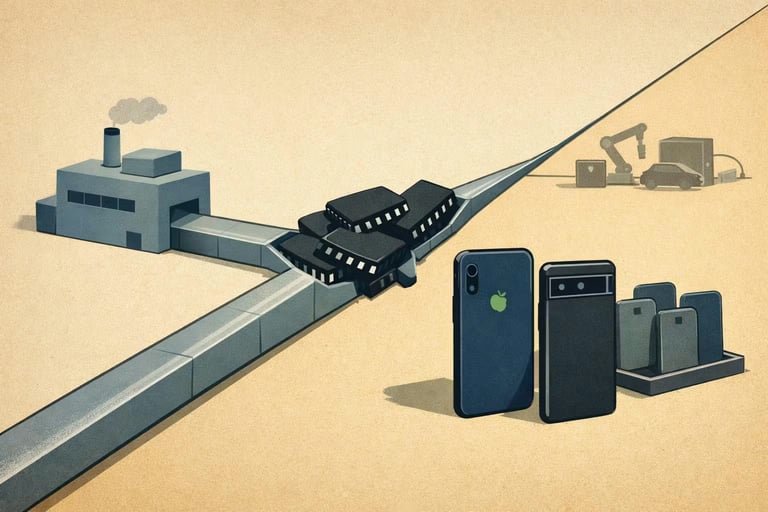


Context shows pricing pressures, supply constraints, and shifts in competitive dynamics as memory costs remain elevated.
Market implications include constrained device production, higher consumer prices, and strategic moves by firms to secure memory supply, including investments in own manufacturing.
The gaming industry may see delays and price hikes as memory needs rise; Sony, Microsoft, and Nintendo are weighing monetization and pricing strategies to offset costs.
The broader implications include potential price surges in PCs and automotive sectors, stockpiling by Tesla and Ford, and wider supply-chain vulnerabilities.
Ripple effects across the handset supply chain favor larger players who can secure parts, while smaller vendors scale back operations.
Smartphone shipments are expected to fall about 13% in 2026 to roughly 1.1 billion units, the weakest in over a decade, as memory-chip shortages and higher prices bite demand.
Top brands like Apple and Samsung are likely to fare better than smaller Android vendors and may gain market share as competition tightens amid rising costs for others.
The memory market is tightening due to AI infrastructure and enterprise servers outpacing supply, driving up prices and constraining inventories across DRAM, HBM, and related products.
Outlook suggests continued price pressure and possible long-term shifts in consumer behavior, such as longer upgrade cycles and growth in secondhand markets, with governments bolstering domestic chip production as a geopolitical move.
Overall, elevated component costs are reshaping business models for smartphone makers and squeezing margins across the electronics industry.
Industry signals point to rising prices and tighter supply from major tech players; HP and Dell are raising prices, while Apple warns of higher memory costs impacting products.
AI expansion is driving semiconductor memory demand, raising downstream costs for data centers and consumer devices.
Summary based on 35 sources
Get a daily email with more World News stories
Sources

The Verge • Feb 26, 2026
Smartphone sales could be in for their biggest drop ever
Reuters • Feb 26, 2026
Smartphone market set for biggest-ever decline in 2026 on memory price surge, IDC says
TechCrunch • Feb 26, 2026
Memory shortage could cause the biggest smartphone shipments dip in over a decade