India's Supreme Court Orders No-Fault Vaccine Injury Compensation Policy Amid AEFI Concerns
March 10, 2026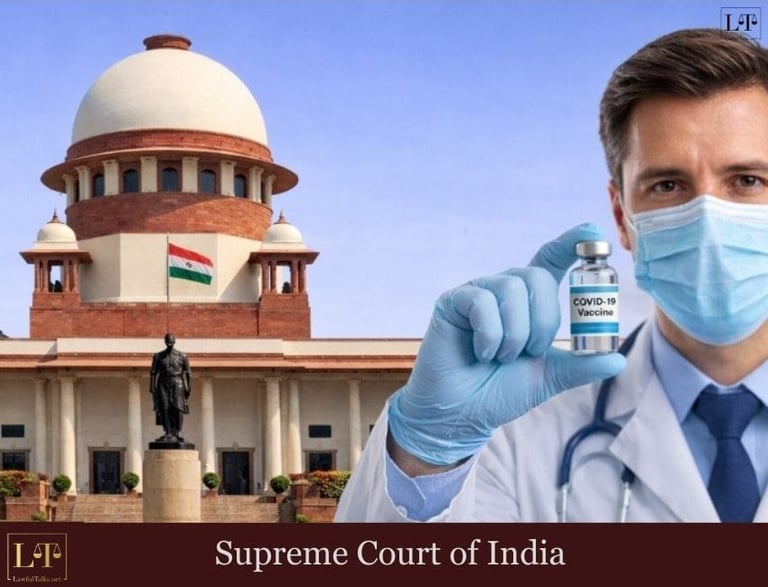


International precedents were highlighted to show that causality in vaccine injury can be complex and that compensation need not depend on proof of negligence in every case.
Petitioners—parents of two girls who died after vaccination—seek compensation, prompt investigations, autopsy data, and guidelines for early detection and treatment of serious side effects.
The petitions stemmed from families alleging deaths and serious harm post-COVID-19 vaccination, with demands for data transparency and a dedicated compensation framework.
Experts noted that no-fault compensation programs exist in several countries and could streamline relief for vaccine-related injuries while preserving public vaccination confidence.
The ruling cautioned that requiring negligence proof in each case would burden families and lead to inconsistent outcomes, aligning with international practice of dedicated vaccine-injury compensation schemes.
Centre data presented to the Court showed roughly 220 crore vaccine doses administered, with about 92,697 AEFIs (0.0042%), 1,171 deaths (0.00005%), plus tens of thousands of minor and several thousand serious cases, and argued that vaccination reduced pandemic harm.
The article notes the presence of advocates for both petitioners and respondents who appeared in the case.
Petitions before the court raised concerns about adverse reactions and fatalities after vaccination, including a case involving two women who reportedly died after the Covishield dose in 2021.
The Supreme Court of India directed the Centre to establish a no-fault compensation policy for individuals harmed by serious Adverse Events Following Immunisation (AEFI) after Covid vaccination, while keeping the existing AEFI monitoring framework intact.
The court said there is no need for a separate court-appointed expert body, stressing that the current scientific assessment framework is sufficient and that the ruling does not equate to liability by the Union government or bar other legal remedies.
Drawing on the May 2022 Jacob Puliyel judgment, the court underscored bodily integrity under Article 21 and the state's duty to regulate public health with constitutional scrutiny, including the obligation to publish adverse-event data.
The decision situates the policy in the context of a pandemic, citing international examples from the UK, Australia, and Japan where no-fault vaccine injury schemes offer rapid relief to those affected.
Summary based on 19 sources
Get a daily email with more World News stories
Sources

The Indian Express • Mar 11, 2026
Frame no-fault compensation policy for adverse events after Covid vaccination, SC tells Centre
Deccan Herald • Mar 10, 2026
SC directs for no fault compensation for those suffered adverse impacts after Covid-19 vaccines
Telegraph India • Mar 11, 2026
Supreme Court asks Centre to frame no fault compensation policy for Covid vaccine harm