India's Supreme Court Orders No-Fault Compensation for Rare Vaccine Side Effects
March 10, 2026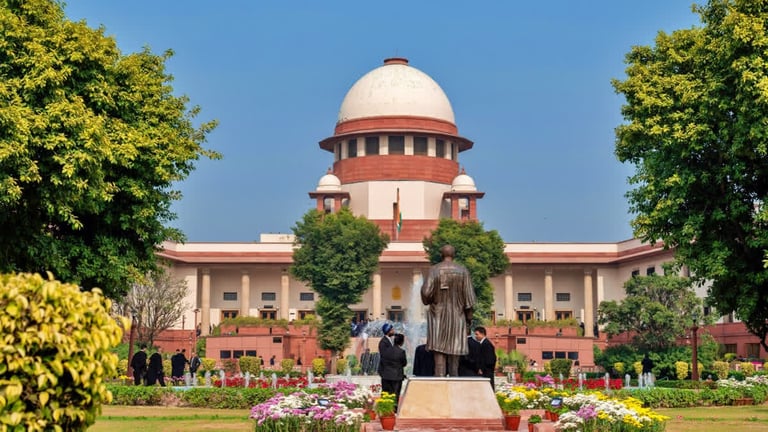

The judgment clarifies that its decision does not preclude individuals from pursuing other legal remedies available under law.
Prime Minister Narendra Modi reportedly received two doses of Covaxin in March and April of 2021.
Two vaccine-related death claims are cited—Karunya Govindan after Covishield and Ritika Omtri after Covishield—yet establishing a direct causal link to vaccination remained challenging.
Covaxin is developed by Bharat Biotech with ICMR, while Covishield is produced by the Serum Institute of India using AstraZeneca’s formula.
Health experts note that serious adverse reactions are extremely rare and vaccines remain highly effective in preventing disease outbreaks including COVID-19.
The government cited data up to November 2022: about 219.86 crore doses administered, 92,114 AEFI cases (0.0042%), 2,782 serious/severe cases (0.00013%), and 1,171 deaths.
The decision aims to balance maintaining trust in vaccination with providing relief for rare but serious adverse events.
The policy is explained as a no-fault framework intended to provide timely relief without proving fault.
During proceedings, arguments centered on whether vaccines were effectively compulsory and concerns about forced vaccination, with the government contending that strict liability for extremely rare AEFI deaths may not be sustainable.
A no-fault compensation system would allow victims to receive financial assistance without proving fault, featuring expert medical review and faster relief.
The decision came on a petition by parents of two girls who died after vaccine side effects, seeking independent investigation, release of autopsy reports, and monetary compensation.
The Supreme Court of India directed the Centre to frame a no-fault compensation policy for serious adverse events following Covid-19 vaccination, while allowing the existing adverse events monitoring mechanism to continue.
Summary based on 28 sources
Get a daily email with more World News stories
Sources

The Times Of India • Mar 10, 2026
SC asks Centre to draft 'no-fault compensation policy' for serious Covid vaccine side effects
The Indian Express • Mar 10, 2026
Supreme Court orders Centre to frame ‘no-fault’ compensation policy for serious COVID-19 vaccine side effects
BusinessLine • Mar 10, 2026
Supreme Court asks Centre to frame no-fault compensation policy for Covid vaccine adverse events