Ukrainian Drone Strikes Cripple Russian Baltic Oil Terminal, Disrupting Global Supply Chain
April 5, 2026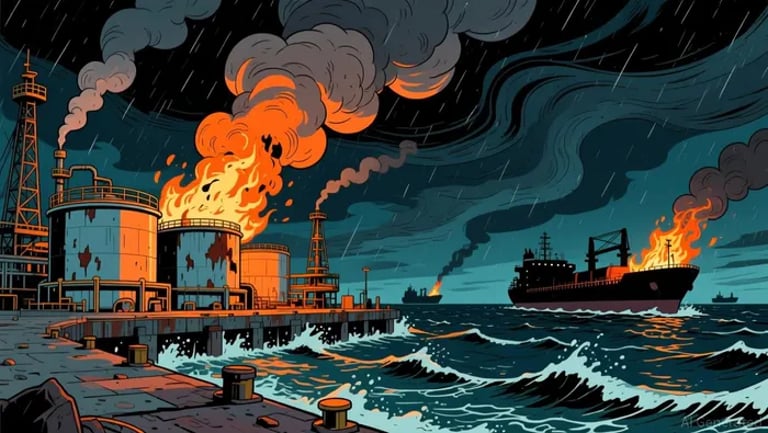


The broader context includes the Druzhba pipeline closure and seizure of Russia-linked tankers alongside drone strikes, all affecting export dynamics, though details remain limited.
Satellite imagery shows Primorsk, Russia’s Baltic Sea oil terminal, has lost about 40% of its storage capacity due to Ukrainian drone strikes in March, severely limiting its export capacity and signaling the most substantial disruption in modern Russian history.
Ust-Luga and Primorsk remain unable to process shipments as Ukrainian drone attacks disrupt Baltic export routes, forcing refineries to reroute and increasing logistical strain across Russia’s western oil corridor.
Market signals to watch include growing use of alternative routes via Vysotsk or Tamans, altered tanker patterns near Transneft terminals, and widening price spreads between Russian crude and Brent as supply uncertainty grows.
European Russia and Siberia face pressure to reroute crude and refined products through smaller Vysotsk or the Black Sea’s Taman, raising costs and logistical complexity.
Disruptions threaten reduced Russian oil production through export restrictions and refinery outages, with potential implications for shipments to Vysotsk or Taman and broader global supply pressures.
Prolonged bottlenecks could curb Russian output as refineries incur higher costs, prompting output contractions if conditions persist.
Kremlin spokesperson called the strikes terrorist attacks and said Russia is taking steps to protect critical infrastructure.
Attacks in March damaged port infrastructure, including multiple strikes on Ust-Luga within ten days, underscoring the intensity of disruption.
Diesel shipments to Primorsk have been blocked since March 22, pushing refineries to seek alternate routes and accelerating bottlenecks in the supply chain.
The Baltic disruption accounts for roughly 30% of Russia’s oil exports, intensifying global supply pressures while the path to resume operations remains uncertain due to possible undetected damage and ongoing frictions.
Refineries are weighing higher-cost options, including rail transport to alternative terminals, as disruptions reshape crude and product flow.
Summary based on 3 sources
Get a daily email with more World News stories
Sources

Economic Times • Apr 4, 2026
Russian oil terminals under attack unable to accept shipments for second week, sources say
Investing.com • Apr 2, 2026
Exclusive-Russia’s Primorsk oil terminal lost 40% of storage to drone attacks, satellite images show
Bitget Exchange • Apr 5, 2026
Ust-Luga Damage Forces Costly Reroute—Russian Oil Exports Face Supply Chain Breakdown Risk