Indonesia Delays Mining Royalties Hike Amid Industry Pushback and Fiscal Balancing Act
May 11, 2026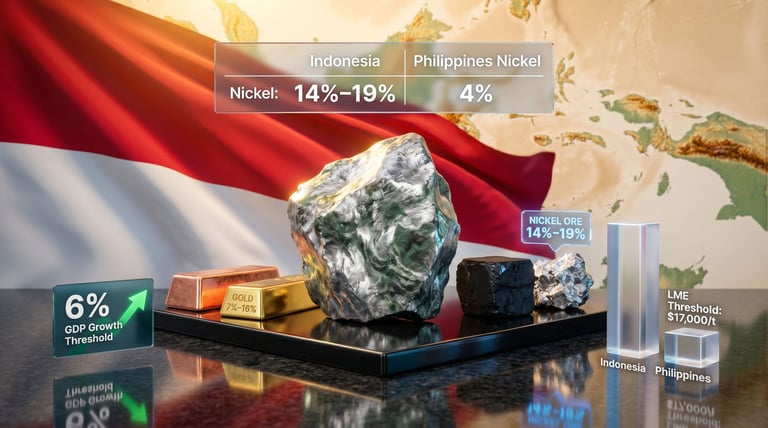


Indonesia has postponed higher mining royalties and export duties, saying authorities are seeking an ideal, mutually beneficial formulation that balances fiscal aims with sector realities.
Energy and Mineral Resources Minister Bahlil Lahadalia confirmed the deferral for 2026, highlighting ongoing tensions between revenue goals and mining-industry dynamics.
Industry pushback centers on current commodity prices, with a focus on nickel where industry groups want deferrals until LME nickel prices recover toward roughly $17,000 per tonne.
Analysts note that durable policy will require resolving tensions between fiscal ambition and investment reality, with a caveat that this is not investment advice.
A price-linked, progressive royalty framework introduced in 2025 would raise rates on windfall profits for nickel ore, copper, gold, and coal, with proposed ranges from 7% to 19% depending on the commodity.
Investors should consider differentiated risk: short-cycle coal faces near-term royalty exposure, nickel smelters should stress-test price scenarios, copper and gold under IUP/IUPK protections have contractual considerations, and downstream processing is advantaged but affected by China’s investment in Indonesia’s nickel sector.
Officials have signaled the government's aim to increase revenue from the mining sector.
Three conditions for full implementation: sustained GDP growth around 6%, nickel prices above $17,000/tonne, and finalization of a mutually beneficial inter-ministerial formulation.
Deferral outcomes could erode policy credibility, reduce near-term sovereign wealth fund revenues, and raise inter-ministerial coordination costs, potentially delaying revenue realization and increasing project costs.
Indonesia’s role, with about 40% of global nickel reserves, adds a global supply-chain dimension that affects downstream battery producers and may spur diversification and alternative chemistries.
After collecting input from the public and businesses, the minister said the plan would be put on hold to craft a good formula that benefits both the government and mining firms.
The delay reflects a broader effort to balance fiscal goals with potential impacts on mining activity and industry profitability.
Summary based on 2 sources
Get a daily email with more Macroeconomics stories
Sources

Yahoo Finance • May 11, 2026
Indonesia delays plan to impose higher royalties, export duties on minerals
Discovery Alert • May 11, 2026
Indonesia Delays Higher Mineral Royalties and Export Duties in 2026