Call for Stronger Crisis Management to Prevent Arms Race in South Asia
May 31, 2026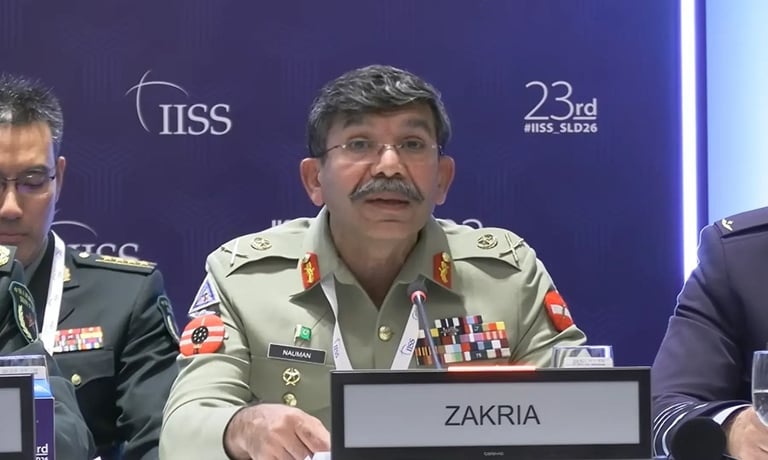

Pakistan’s measured response is framed as constraining prospects for conventional war and highlighting the need for escalation control and effective crisis management.
Despite the conflict, continued Indian militarisation and hostile rhetoric, coupled with weak crisis-management mechanisms, threaten regional stability and complicate strategic balance.
There is bipartisan emphasis on developing international norms for AI, autonomous systems, cyber, and space tech, with human oversight to prevent destabilising arms races and guide responsible governance.
The overarching message is that peace and strategic stability depend on responsible statecraft, governance of technology, and sustained international engagement rather than military power alone.
No country can tackle emerging risks alone; transnational challenges require collaborative, multilateral responses.
Resilience—cyber resilience, critical infrastructure protection, digital literacy, and building public trust—was highlighted as key to strategic stability alongside traditional security measures.
The four-day conflict in the region began with an attack in occupied Kashmir; Pakistan denied responsibility and called for a neutral investigation while India accused Pakistan of involvement.
Pakistan highlighted its use of multi-domain operations—cyber, electronic warfare, ISR, space assets, and information maneuvers—enabled by tri-service coordination to deter conventional conflict and generate cross-domain effects.
Strategic stability in South Asia is shaped by nuclear deterrence, conventional asymmetry, unresolved disputes, and the influence of China, which was described as a constructive stabilising factor.
At the Shangri-La Dialogue, Lt. Gen. Nauman Zakria said Pakistan’s May 2025 response reshaped the region’s war calculus by debunking space for war and reducing prospects for conventional conflict.
The speaker urged stronger crisis-management structures, sustained cross-border dialogue, and transparent communication as essential tools to reduce misunderstandings during geopolitical tensions and to prevent destabilising arms races.
Zakria warned that the interconnected tech ecosystem is eroding predictability, stressing that responsible statecraft and governance of technology are necessary for stability.
Summary based on 3 sources
Get a daily email with more World News stories
Sources
Daily Times • Jun 1, 2026
Pakistan has debunked notion of space for war in S Asia: official
Pakistan Today • May 31, 2026
Lt-Gen Zakria says May 2025 response reshaped South Asia’s war calculus