Top 10% Wealthiest Drive $5.7 Trillion in Environmental Damage, Study Finds
June 18, 2026


A new study calculates that the top 10% of global consumers drive the majority of environmental damage, totaling up to $5.7 trillion annually, with conservative estimates around $1.7 trillion and an average of about $7,500 per top-10% individual.
Within-country differences are stark, with the United States’ top 10% responsible for the highest per-person damage—up to roughly $63,000 yearly—followed by peers in Germany and China, while India and Egypt show lower figures.
The findings argue that environmental damage from high-consuming groups dwarfs current international climate and biodiversity financing and aligns with the scale of funding needed globally to address these crises.
Researchers note the figures are conservative, covering only four of nine planetary boundaries and excluding investment-related emissions.
Pricing for biodiversity remains uncertain and context-specific, climate damages are priced uniformly due to their global nature, and considerations like GDP per capita and population density influence other priceings, though not fully integrated.
The paper advocates polluter-pays principles and targeted environmental taxes on luxury consumption as potentially more progressive and effective, while acknowledging that pricing alone cannot fully compensate for damages.
Policy implications emphasize that wealthier nations should shoulder more climate financing and damage responsibility, potentially through mechanisms like a Loss and Damages Fund, though the fund is currently underfunded.
A key conclusion is that concentrating mitigation efforts on the top decile could close funding gaps for climate and biodiversity while generating revenue for sustainability transitions and equity improvements.
Limitations include partial coverage of planetary boundaries, biodiversity pricing uncertainty, and the consumption-based footprint approach which may underestimate total emissions due to savings and investments by high-income groups.
Tying environmental damages to top-10 taxes could reduce emissions and raise revenue for sustainability, with potential equity benefits if revenues are redistributed to lower-income groups; effectiveness depends on country context and design.
The study monetizes damages across climate, biosphere integrity, nutrients, and freshwater using the Environmental Prices Handbook, scaling by GDP per capita and deflating to 2017 figures.
Proposals include progressive taxation in high-income countries—luxury taxes and wealth taxes for the top 1%—to align responsibility with pollution and fund climate and biodiversity targets.
Summary based on 4 sources
Get a daily email with more World News stories
Sources


Gizmodo • Jun 18, 2026
Top 10% of Consumers Create Up to $5.7 Trillion in Environmental Damage Annually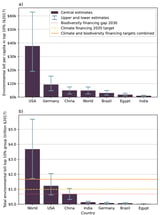

Mirage News • Jun 18, 2026
Top 10% Cause $5.7T in Environmental Damage Yearly