Unitree's Strong IPO Launch Signals Push into Embodied AI Amid Rising U.S. Robotics Competition
August 21, 2026


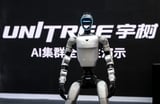
Unitree, a leading Chinese humanoid and quadruped robot maker, kicked off on the Shanghai Stock Exchange with a strong IPO showing amid rising U.S. competition in robotics, signaling a broader push into embodied AI.
Analysts note that a major software leap is still 2–10 years away, with real-world deployment lagging behind foundational AI models.
The event underscores X Square Robot’s strategy of embodied AI, linking data, models, skills, and hardware to enable perception, reasoning, and action across tasks from logistics to homes.
Industry investors are increasingly judging startups on concrete capabilities—data quality, model performance, and the ability to translate demos into scalable, customer-ready solutions.
Many experts expect a gradual, multi-year diffusion rather than a single breakthrough, due to needs for hardware integration, safety, cost controls, and scenario validation in production.
Real-world testing in industrial and service contexts builds reliability and informs iterative hardware and software improvements, fueling long-term competitiveness.
Market observers emphasize a hardware-software co-evolution under the umbrella of Physical AI, rather than simple cost reductions.
The broader market context includes capital flowing into physical AI and the need for reliable software generalization and hardware reliability for scalable adoption.
Challenges persist around data quality and volume, lack of standardized datasets and training norms, and the need to demonstrate scalable, reliable delivery beyond lab success.
Strategies focus on a fast-slow architecture—large models for deep reasoning paired with smaller, faster models for high-frequency tasks—driven by extensive real-world data collection and feedback.
Near-term emphasis is on economically useful tasks rather than flashy demonstrations of walking or extreme flexibility, with real-world data and scalable hardware crucial for progress.
Risks include slower growth, earnings volatility, and potential gaps between R&D plans and actual outcomes, underscoring the need for sustained progress and execution.
Summary based on 201 sources
Get a daily email with more Startups stories
Sources
New York Post • Aug 19, 2026
Chinese humanoid robot maker Unitree jumps 460% in blockbuster Shanghai IPO
Gizmodo • Aug 19, 2026
Humanoid Robot Maker Unitree Pops an Outrageous 629% in Trading Debut
TNW | Robots • Aug 20, 2026
Unitree’s founder says robots are nearing a ‘ChatGPT moment’