Solar Surpasses Coal in China's Energy Mix, Marking a Historic Shift in Installed Capacity
September 1, 2026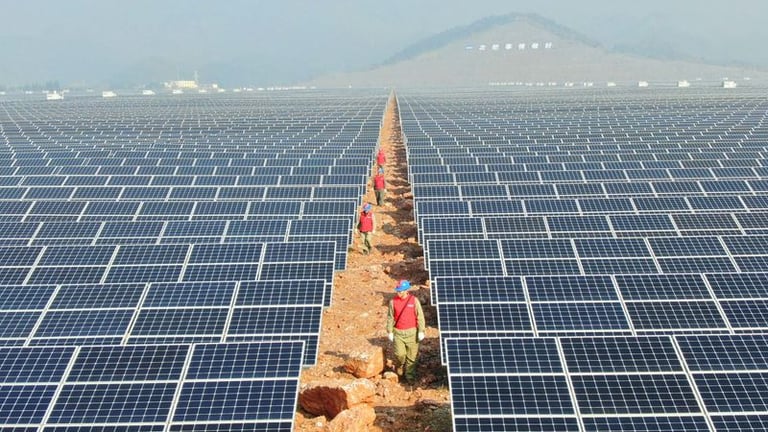

China’s electricity mix has shifted decisively, with solar energy for the first time surpassing coal in total installed capacity, reaching about 1,286 GW to coal’s 1,285 GW by the end of July 2026, and solar accounting for roughly 31.5% of installed capacity.
State media and official sources note this 31.5% share marks a historic turning point in China’s energy mix as renewables gain ground against coal.
Despite the milestone, experts warn that rapid coal capacity growth and grid prioritization could still curb renewables, with as much as a quarter of renewables-generated power potentially curtailed.
China reiterates its climate goals to peak CO2 emissions before 2030 and reach carbon neutrality by 2060, while continuing to rely on coal for energy security during the transition.
Industry researchers say wind, solar, and storage are nearing a tipping point for reliability, but integration challenges remain as coal use declines.
The milestone was confirmed by China’s energy authority and state media, reflecting policy adjustments accompanying the shift in the energy mix.
Solar deployment slowed in the first seven months of 2026, with a 62% drop in new capacity year-on-year after a policy change ended price guarantees and let market prices set inputs.
The shift represents a turning point in China’s power system, moving away from coal in installed capacity even as coal remains a staple in actual generation for now.
China has pursued large-scale solar expansion, particularly in the western and northern regions, but coal still dominates emissions and serves as a cheap backup during shortages.
Solar generation grew meaningfully in early 2026, with first-half output rising 15.5% year-on-year and solar contributing about 13% of total electricity consumption.
Renewables reached 41.2% of total electricity production in the first half of the year, surpassing 40% for the first time as part of the broader energy transition.
China aims for non-fossil fuels to supply half of national electricity by 2030, pursuing a mix of renewables, nuclear, and storage to cut emissions.
Summary based on 8 sources