NATO Thwarts Russian Undersea Cable Sabotage in Arctic, Heightens Tensions with Kremlin
September 10, 2026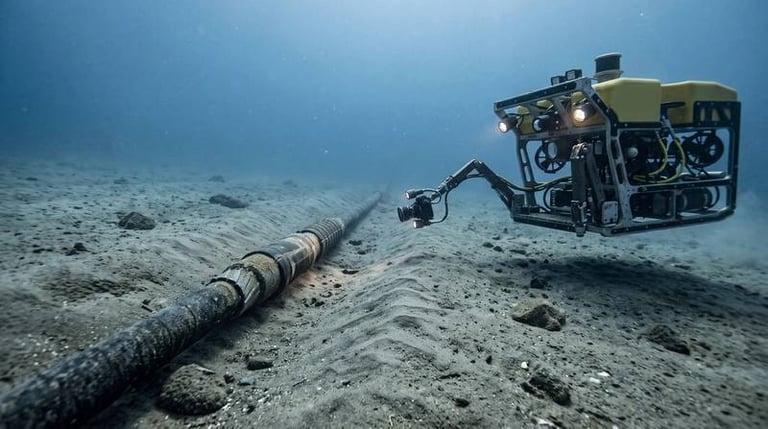


Europe confronts a growing hybrid-threat posture as Russia faces scrutiny over sabotage, drone incidents, and attacks on critical infrastructure, including a Leipzig/Halle Airport drone incident attributed to Russia by German authorities.
NATO must not tolerate hybrid war tactics, a stance echoed by the US Ambassador to NATO who urges a decisive response.
Arctic exercises saw British, Norwegian, and American forces intercept vessels linked to Russia’s deep-sea research directorate, preventing potential damage to undersea cables.
Policy shifts emphasize flexible, interdisciplinary security thinking and sustained investment in energy diversification, cyber defence, critical infrastructure protection, civilian preparedness, and information integrity, rather than relying solely on traditional military spending.
Experts stress that better linking existing tools—assessing interdependencies, incorporating cognitive factors in exercises, and building multi-domain scenarios that fuse infrastructure, cyber, economic, information, and geopolitical threats—is the priority over creating new tools.
The aim is integrative resilience: connect current tools, evaluate risk interdependencies, and weave cognitive and multi-domain elements into exercises.
A key takeaway is that periods of stability can seed future crises, so the goal is stronger resilience and adaptive capacity rather than alarmism.
European resilience hinges on integrated, cross-border efforts to anticipate and manage interconnected risks.
Across sources, there is heightened European focus on defense commitments, alliance cohesion, and governance integrity amid rising security pressures.
The reporting is presented as in-depth content behind a paywall, signaling exclusive analysis for subscribers.
EU defense remains fragmented; calls persist for centralized real-time defense capabilities, a potential European cyber command, and a European cybersecurity center.
Readers are urged to monitor supply chains, energy markets, and security hardening as geopolitical fractures are unlikely to heal quickly, underscoring vigilance over panic.
Summary based on 92 sources
Get a daily email with more World News stories
Sources
hromadske • Sep 10, 2026
NATO allies foiled Russian test of secret weapon designed to disable undersea cables - Reuters
ET Telecom • Sep 11, 2026
NATO allies foil Russian subsea internet cable sabotage plot
Межа • Sep 10, 2026
NATO Allies Disrupt Russian Undersea Cable Sabotage Exercise Near Svalbard