Bipartisan Bill Targets Russia with Expanded Sanctions, Set for House Approval
September 15, 2026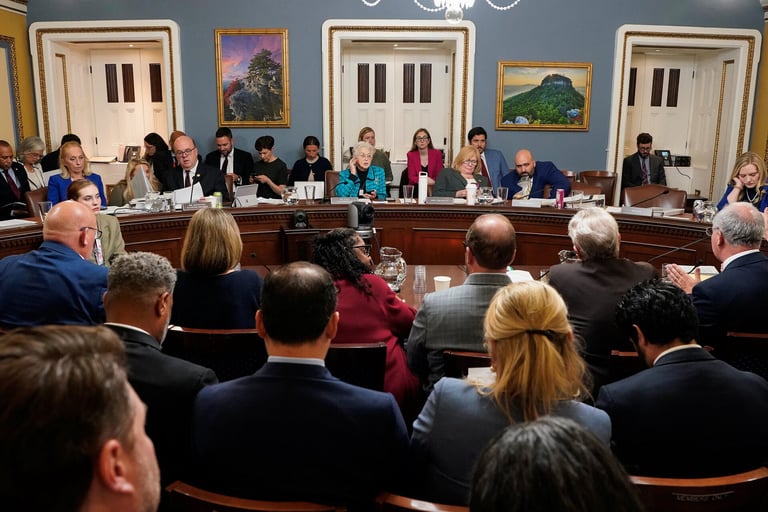

Supporters argue the legislation addresses U.S. and allied security concerns amid shifting global alignments, highlighting bipartisan Senate approval as justification for continued action.
A bipartisan bill advancing through the House Rules Committee would broaden sanctions on Russia over the war in Ukraine, signaling likely passage later in the week.
The bill, co-authored by the late Lindsey Graham and Senator Blumenthal, expands sanctions and includes new authorities for the president to target Russian officials and entities.
The press material notes McCaul’s Q2 2026 fundraising disclosures, showing minimal activity and cash on hand, with figures drawn from FEC filings and Quiver Quantitative.
The legislative timeline traces the package from its April 2025 introduction, through administration negotiations in 2025, to a Kyiv consensus in mid-2026 and Senate approval in August 2026 by a wide margin.
Among recently proposed bills, H.R.10076 stands out as the Sanctioning Russia and Iran Act of 2026, with additional legislation tracked on Quiver Quantitative.
The bill would empower the president to impose up to 500% tariffs on Russia-origin goods and on goods from third countries involved in uranium-for-petroleum exchanges with Russia.
A related provision explicitly targets imports from Russia and from nations participating in trade linked to Russian uranium and petroleum products.
With the House set to adjourn for a seven-week recess on Sept. 17, Speaker Johnson indicated the bill could be fast-tracked under a suspension of the rules.
The sanctions package would authorize targeting individuals tied to the Russian government who obstruct peace negotiations, breach a future peace agreement, or destabilize Ukraine, including visa bans and asset freezes on Putin and top military leaders.
Additional measures would sanction Russian officials and foreign entities supplying defense articles, using visa restrictions and asset freezes as part of the toolkit.
Overall, the White House would be empowered to sanction actors connected to the Russian state that undermine peace efforts or destabilize Ukraine.
Summary based on 3 sources
Get a daily email with more World News stories
Sources
Syrian Arab News Agency (SANA) • Sep 15, 2026
US House panel advances Russia sanctions bill
QuiverQuant • Sep 15, 2026
Press Release: Michael McCaul Backs Russia and Iran Sanctions Bill at House Rules Hearing