US-China Strategic Stability Masks Military Competition Amid PLA Command Rebuild
September 16, 2026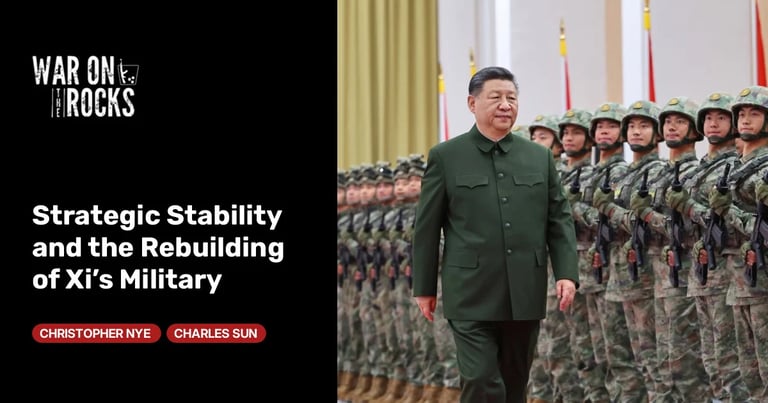

Strategic stability between the United States and China is framed as buying Beijing time to reconstruct the PLA, with both sides pursuing a 'constructive' stability approach that may mask ongoing military competition and the risk of miscalculation.
High-level investigations and removals point to significant leadership disruption at the top, including the removal from Central Military Commission posts by August 2026 as Beijing moves to rebuild command and modernize defenses.
Xi ties Taiwan reunification to the Party’s historic mission, signaling continued deterrence priority and potential coercive options around Taiwan even as command reconstruction progresses.
Near-term tests loom around Xi’s White House visit later in the year and rare-earth export-control talks, shaping military stability, economic leverage, and technology access during the PLA’s rebuild toward 2027 goals.
Ongoing issues such as Rocket Force procurement problems and internal conflicts have contributed to a temporary reduction in Taiwan incursions in recent months.
China’s defense spending continues to grow, with 2025 central defense expenditure around RMB 1.7847 trillion and a 2026 budget about RMB 1.9096 trillion, indicating no retrenchment but pressures affecting repair and modernization pace.
Near-term leadership turnover creates command friction and uncertainty, while longer-term effects could yield a tighter, more centralized command capable of translating political decisions into military action.
The PLA is undergoing a consequential but not terminal command transition: purges create institutional discontinuity while Xi tightens political control and replenishes senior posts, maintaining modernization without proving the PLA is hollow.
There is cautious optimism about a temporary lull in hostilities and a focus on internal consolidation to project strength by 2027.
A damaged command structure could impair crisis management in the Taiwan Strait and South China Sea, with a pause in large-scale exercises and reduced incursions as the PLA rebuilds.
Beijing’s three-year horizon for stability suggests continued pressure on Taiwan after the rebuild, while the U.S. should prepare for a protracted competition rather than expecting a decisive peaceful settlement.
Rebuilding proceeds on two tracks: personnel emphasis on loyalty and political rectification, and materiel repair and procurement reform to modernize weapons systems.
Summary based on 3 sources
Get a daily email with more World News stories
Sources
War on the Rocks • Sep 16, 2026
Strategic Stability and the Rebuilding of Xi’s Military
https://debuglies.com • Sep 16, 2026
Strategic Stability and the Rebuilding of Xi’s Military: Command Disruption, Political Reconsolidation and the PLA’s Post-Purge Risk Cycle
SSBCrack News • Sep 16, 2026
Beijing's Military Weakness: Strategic Stability or Opportunity? - SSBCrack News