US-China Summit Aims to Tame Tensions Amid AI Race and Taiwan Strait Concerns
September 18, 2026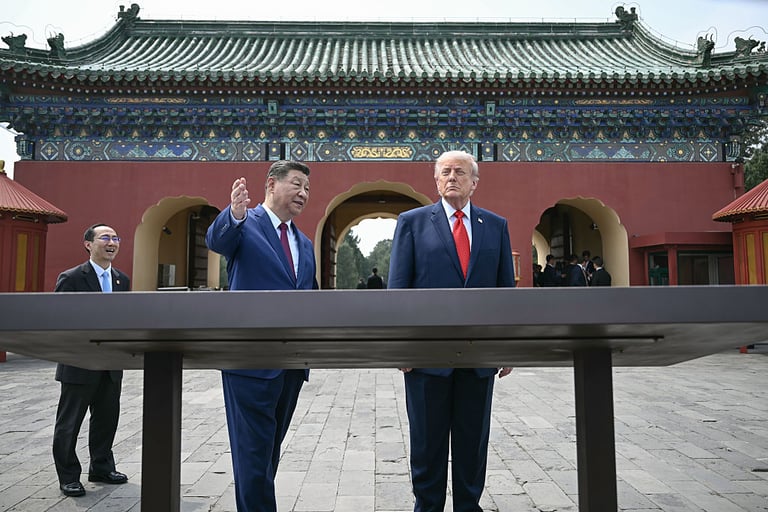


Ahead of the Washington summit, the United States and China are positioning to stabilize a bilateral relationship strained by trade, Taiwan, Iran, and AI, with leaders scheduled to meet in a high-stakes effort to reset ties.
Public discussions may touch on denuclearization of North Korea, but substantive outcomes are unlikely as China leans toward closer alignment with Pyongyang and the U.S. wants direct talks with Kim Jong-un.
Taiwan remains a focal point, with potential U.S. opposition to Taiwan independence and talks on arms packages framed within sensitivities around regional stability and alliance commitments.
China is tightening control over its civilian economy and mobility to safeguard technological security and intellectual property as part of broader AI-driven military modernization.
Domestic politics show a split: a bill shielding consumers from higher energy costs due to data centers has passed, but there is no consensus yet on broader AI regulation despite calls for guardrails from leadership.
U.S. lawmakers and AI researchers warn of risks and urge international coordination, with some advocates for slower progress to ensure safety in AI developments.
Supplemental funding was aimed at filling shortfalls after opposition cuts trimmed a large planned package and restored funding for domestically produced systems like the Strong Bow missile program.
Additional allocations cover drones, anti-drone defenses, and other classified projects not publicly disclosed.
Taiwan has naturalized hundreds of foreign professionals in fields like electronics, semiconductors, and AI to boost national competitiveness, marking a strategic talent drive with the latest approval occurring recently.
Taiwan’s defense stance is shifting toward higher spending and drone development, with politicians emphasizing timely delivery of resources to meet defense goals.
China uses value benchmarks to measure alignment with its models, signaling that certain approaches may outperform Western ones on value-alignment metrics.
China has published an AI safety governance framework (TC260) emphasizing human-in-the-loop controls and controllability, signaling a priority on safety governance.
Summary based on 34 sources
Get a daily email with more World News stories
Sources
Economic Times • Sep 18, 2026
What will Trump and Xi discuss in Washington next week?
Seeking Alpha • Sep 18, 2026
The High-Stake Trump-Xi Meeting: Brace For Volatility
The New York Times • Sep 19, 2026
Opinion | Trump and Xi Can Make Progress on A.I.
The Diplomat • Sep 19, 2026
4 Fault Lines that Could Shape the Trump-Xi Summit