Black Sea Port Disruptions Threaten Global Grain Markets, Triggering Supply Shocks and Price Surges
September 21, 2026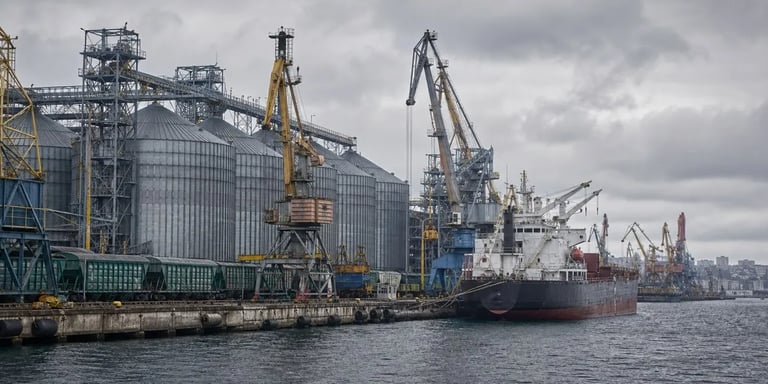

The disruption of Black Sea port operations around Odesa is complicating Ukraine’s grain exports and heightening global food market risk as ongoing strikes on ports, grain terminals, silos, and vessels persist since July.
A Black Sea grain disruption is triggering supply shocks, contributing to higher inflation and food insecurity, while global attention also remains on energy risks in the Strait of Hormuz and the Middle East.
The disruption of Russian and Ukrainian wheat shipments is creating a global logistical and financial shock, as these two countries supply a large share of world grain and oilseed markets, making the Black Sea a vital artery for global food trade.
Asian processors are adjusting procurement strategies for the fourth quarter of 2026, shifting to replacement sources such as Bulgaria, Romania, and Western Australia, and expecting higher freight premiums as warehouse inventories dwindle.
Alternative supply routes are being mobilized, with Bulgaria, Romania, France, Argentina, Australia, Lithuania, Latvia, Estonia and others stepping in, but none can fully replace Black Sea tonnage, and many routes raise rail, handling, and fuel costs.
A concrete example from a Hong Kong/Vietnam-based buyer illustrates procurement challenges as substitutes are sought to offset Black Sea disruption.
Importers are seeking alternative supplies as Black Sea wheat shipments decline, with buyers including Egypt, France, the Baltic states, Romania, Argentina, India, and Australia turning to sources outside the region, while wheat prices reach multi-year highs.
Higher feedstock costs are compressing margins for livestock, aquaculture, and bakery sectors in Asia, signaling potential price increases for baked goods, instant noodles, and animal proteins.
In Vietnam, Golden Wheat lost several Black Sea shipments and replaced some with Bulgarian supplies, while the rest were sourced from higher-cost spot markets, underscoring shifting supplier dynamics.
Vietnam’s Golden Wheat illustrates substitution by sourcing Bulgarian wheat and higher-priced U.S. wheat to cover shortfalls after Black Sea shipments were blocked.
Wheat traders faced immediate supply gaps as Black Sea shipments were halted, prompting buyers like Golden Wheat to seek alternatives such as Bulgaria.
Ukraine faces infrastructure limits at Odesa, with storage shortages possible by November and export revenue impacts; Danube routes are strained by low water levels and congestion.
Summary based on 4 sources
Get a daily email with more World News stories
Sources

UA.NEWS • Sep 21, 2026
Disruption of Black Sea ports threatens food market — The Japan Times
The Japan Times • Sep 21, 2026
The other Hormuz: Black Sea blockade threatens a food supply shock
Urban Acres • Sep 21, 2026
Black Sea Wheat Crisis Threatens Global Food Supply
RetailNews Asia • Sep 21, 2026
Black Sea Wheat Shipments Drop 50 Percent as Port Strikes Hit Asian Millers