Ukraine's F-16 Fleet Faces Readiness Crisis Amid Maintenance Bottlenecks and Missile Shortages
October 1, 2026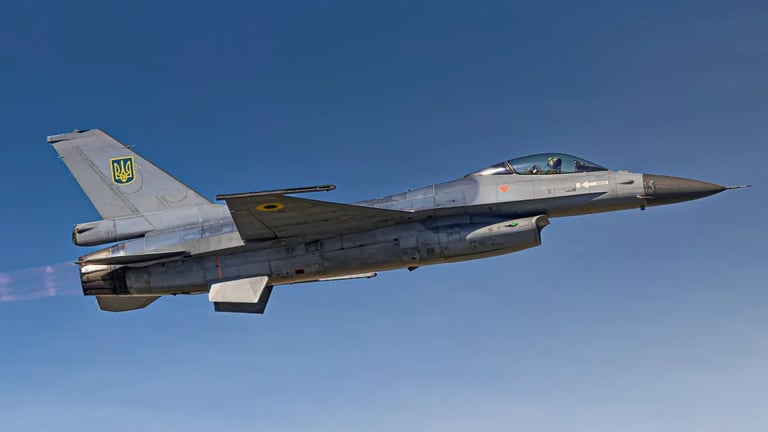

More than half of Ukraine’s F-16s are in maintenance limbo, and Western sources warn the fleet could be exhausted by year’s end if current rates continue.
Ukraine’s F-16 fleet faces a readiness crisis driven by high operational tempo, maintenance bottlenecks, and shortages of air-to-air missiles.
In the near term, alternatives to the F-16 are limited, with aging MiG-29s and Su-27s, limited Mirage 2000-5F deliveries, and Sweden’s Gripen program progressing slowly, though initial deliveries are expected later in the decade.
Missile stocks, especially AIM-9 Sidewinders and AMRAAMs, are depleted due to high usage, forcing pilots to ration missiles and, in some cases, rely on the internal 20mm cannon.
Maintenance strain is underscored by a large Belgian Sabena Aerospace Engineering contract to perform intermediate- and depot-level work through January 2029, with turnarounds reportedly up to 40 weeks for phase-inspections.
F‑16s are crucial for countering Russian jet-powered drones and other aerial threats, but aging airframes and limited sustainment capacity increase vulnerability to extended maintenance delays and munitions shortages.
The sustainment challenge is tied to broader Western support, as AMRAAM and Sidewinder stocks are shared with Ukraine’s NASAMS system, further constraining availability.
Ukraine has received around 40–50 F-16s so far, with about 110 more promised by a coalition of Belgium, Denmark, the Netherlands and Norway; some airframes are held for training in Europe, and five F-16s have been confirmed lost.
Maintaining a meaningful Ukrainian air presence hinges on keeping the F-16 fleet ready, armed, and supported by adequate maintenance capacity amid evolving Russian drone threats.
Summary based on 1 source
Get a daily email with more World News stories
Source
TWZ • Sep 30, 2026
Ukraine’s F-16 Fleet Is In A Readiness Crisis