China's Covert Operations in Taiwan: A Blueprint for Global Influence and Economic Leverage
October 14, 2026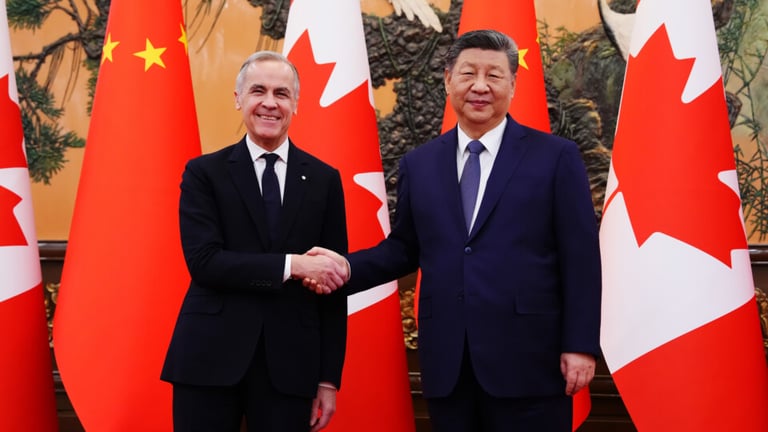

China is increasingly using intelligence operations and influence campaigns to pressure Taiwan and test methods that could be applied to Western democracies.
Economic leverage is a key tool, with examples like Canada’s canola and Chinese vehicle imports showing how trade relationships can be used as political leverage.
Ongoing geopolitical tensions are shaping regional dynamics, including U.S. debates over Taiwan arms packages and Japan’s strategic stance, with potential consequences for alliance commitments.
Canada’s strategic partnership with China and RCMP-MPS cooperation are cited as ties that could undermine Canada’s sovereignty and industrial base over time.
Quotes from Jürgen Kremb underscore the severity of the threat and advocate for cautious, measured engagement with China by Western states.
China’s United Front, militia-like proxies, and overseas police stations are cited as mechanisms to influence diaspora communities and suppress dissidents abroad, with implications for elections.
Western policymakers are urged to reassess dependency on China, warning that perceived gains may erode national sovereignty and democratic integrity.
Jürgen Kremb estimates tens of thousands of Chinese agents operate in Taiwan, describing a four-layer intelligence operation and likening China’s security apparatus to the KGB on steroids.
Taiwan is portrayed as a testing field for interference tactics that could be scaled to other democracies, including Canada, Australia, and European nations.
Taiwan is depicted as a testing ground for Beijing’s hybrid warfare tactics, spanning media manipulation, cyberattacks, political influence, and coercive economic leverage.
Summary based on 1 source