Australia and Philippines Sign Defence Pact to Expand Maritime Cooperation
November 15, 2026

Australia and the Philippines signed a defence agreement to deepen intelligence sharing, coastguard operations and joint training, with Australia also pledging more investment in maritime surveillance, including drones.
The pact comes amid continuing clashes and accusations in contested waters, including Chinese water-cannon attacks and maritime harassment near the Spratly Islands and Scarborough Shoal, while an ASEAN code of conduct remains stalled over whether it should be legally binding.
The agreement’s backdrop includes the 2016 arbitral ruling that rejected China’s historic-rights claims under the nine-dash line where they exceeded maritime entitlements under UNCLOS; China rejects the ruling.
The framework covers maritime, air and land activities, information-sharing, planning, training and defence infrastructure, as well as patrols and humanitarian and disaster-response work, but it creates neither a mutual-defence treaty nor an automatic obligation to respond militarily.
Philippine Defense Secretary Gilberto C. Teodoro, Jr. said the arrangement streamlines implementation of the bilateral Status of Visiting Forces Agreement, cutting coordination steps from about 100 to 10 and making joint activities easier to organise.
The agreement updates a 1995 defence arrangement and builds on a visiting forces agreement in effect since 2012, which allows each country’s troops to train in the other’s territory.
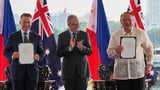
Signed during the 80th anniversary year of diplomatic relations, the pact was formalised by Philippine Defence Secretary Gilberto Teodoro Jr and Australian Ambassador Marc Innes-Brown during Anthony Albanese’s visit for regional summits.
Albanese said the two countries conduct up to 200 defence activities annually, involving 2,500 to 3,000 Australian Defence Force personnel, and stressed that closer ties would not rule out engagement with China.
A proposed Combined Coordination Center in the Philippines, alongside expanded exercises with the United States, Australia and Japan, is expected to improve Manila’s access to intelligence, maritime surveillance and coordinated responses; the cooperation does not establish a four-country alliance or permanent foreign military base.
The informal grouping, nicknamed “the Squad,” could expand defence cooperation, but Song questioned whether its members could align their differing interests and operate cohesively, saying its prospects depend on US leadership.
Analysts say closer military ties could strengthen deterrence and stability, but they would not guarantee that allies intervene in a crisis.
The center’s effectiveness may depend on US-China relations, leaving Manila to weigh closer security cooperation against the risk of being drawn into superpower rivalry.
Summary based on 11 sources
Get a daily email with more World News stories
Sources
euronews • Nov 15, 2026
Australia and Philippines sign new defence pact amid South China Sea tensions
The Sydney Morning Herald • Nov 15, 2026
Drones, intelligence and a bucket of chicken: Australia and the Philippines sign new defence pact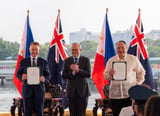
The Diplomat • Nov 16, 2026
Philippines, Australia Sign New Defense Agreement Amid China Pressure
The Japan Times • Nov 15, 2026
Australia and Philippines upgrade defense ties with focus on China