Oxfam Warns More Than 99% of Gaza May Be Contaminated After Three Years of War
November 23, 2026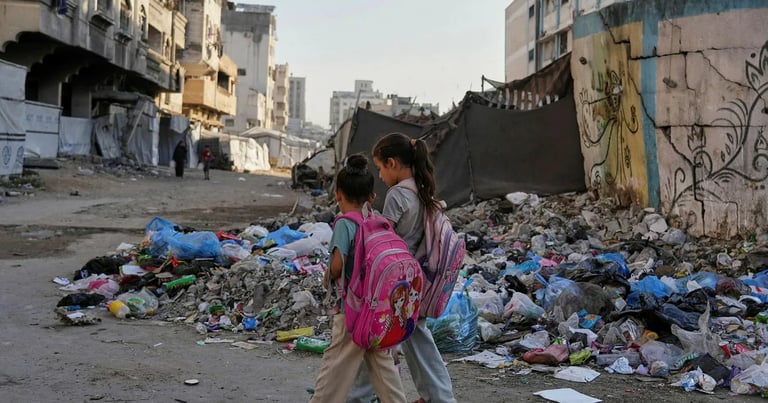

Oxfam’s new report warns that more than 99 percent of Gaza may be contaminated with hazardous materials after three years of war, calling the damage a “humanitarian and environmental catastrophe.”
Satellite and remote-sensing analysis suggests military operations affected about 78 percent of Gaza’s land and produced roughly 61 million tonnes of rubble; potential hazards include heavy metals, explosive residues, asbestos, dioxins and biological contaminants.
Because access restrictions have prevented comprehensive field testing, the findings point to widespread potential hazards but cannot establish which contaminants are present or the exposure levels at individual sites.
The damage to wastewater infrastructure is compounding the risks: only 19 percent of sewage pumping stations remain operational, and about 40,000 cubic metres of untreated sewage flow into the Mediterranean each day, with another 15,000 cubic metres lost through cesspits and leaks.
Water contamination is also evident in testing: faecal coliforms were detected in 19 percent of 79 groundwater wells sampled in July 2026, compared with 2 percent in 2021.
Across Gaza, failing sanitation and limited access to larger landfills have left untreated wastewater and rubbish in streets and residential areas, attracting pests and exposing people to disease and skin conditions.
Children face particular risks from polluted water, poor sanitation and pests, which can contribute to illness and malnutrition.
Dust from damaged buildings and debris, along with smoke from burning waste, may expose residents to harmful airborne pollutants, with Gaza City, Jabalia and North Gaza Governorate identified as areas of heightened potential risk.
Agricultural recovery is also threatened: a September 2025 UNEP assessment found losses of about 97 percent of tree crops, 95 percent of shrubland and 82 percent of annual crops compared with pre-conflict conditions, while soil contamination could make food production unsafe without testing.
Potentially persistent soil pollution could affect crops and groundwater, particularly in areas around Beit Hanun, Wadi Gaza and northeast of Khan Younis.
Oxfam warns that contamination could last for decades, while rubble, hazardous materials and unexploded ordnance pose dangers during investigation and cleanup and could delay reconstruction.
Oxfam and other organizations call for environmental testing, safe rubble and hazardous-material management, wastewater-system repairs, specialist removal of unexploded munitions, agricultural land checks and long-term public-health and environmental monitoring.
Summary based on 3 sources