Land-Mine Casualties Hit Five-Year High, With Civilians and Children Bearing the Brunt
November 24, 2026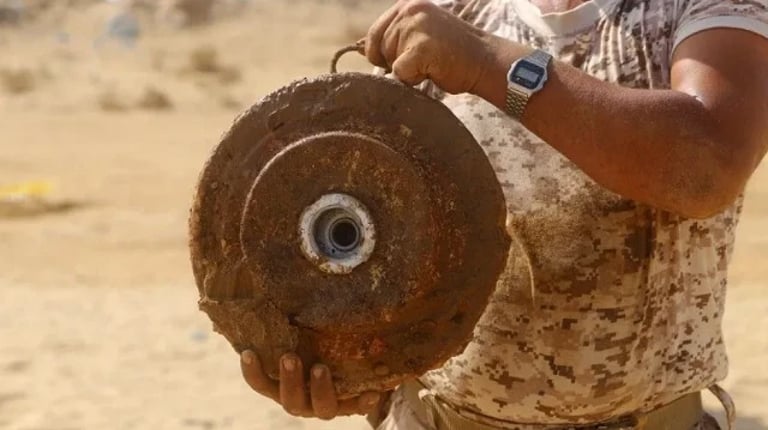

Land-mine and unexploded-ordnance casualties hit a five-year high in 2025, killing or injuring 6,929 people worldwide; civilians made up about 84% of victims, and half of those civilians were children.
Children face particular risks: since 1999, they have accounted for 36% of civilian casualties whose ages were known, often after mistaking explosive objects for toys or handling them out of curiosity.
The report documented land-mine use in 2025 by Ukraine, Iran, Myanmar, North Korea and Russia, as well as by non-government groups in several countries; it also cited indications of possible U.S. use.
Myanmar recorded 1,891 casualties for the third consecutive year—the highest national total—with mines reported in nearly two-thirds of its townships and an average of five casualties a day.
Syria reported 1,602 casualties, up more than 50%, as people returned after the Assad government fell at the end of 2024 and encountered mines and unexploded ordnance.
Southeast Asia accounted for 27% of global casualties despite having just over 8% of the world’s population, with widespread contamination in Myanmar, Cambodia, Laos, Vietnam and elsewhere.
The danger persists after fighting ends: mines and unexploded ordnance restrict movement and refugee returns, block access to services and aid, contaminate farmland, and divert public money to clearance.
Meanwhile, mine clearance slowed as international funding became more concentrated, leaving some affected countries without assistance and putting lives and livelihoods at risk.
Estonia, Finland, Latvia, Lithuania and Poland became the first countries to withdraw from the Mine Ban Treaty; Finland and Poland were preparing to resume antipersonnel-mine production.
Lebanon, the Marshall Islands and Tonga joined the treaty, bringing membership to 162 countries; it prohibits antipersonnel-mine use, stockpiling, production and transfer, and requires clearance, stockpile destruction and victim assistance.
Tamar Gabelnick of the International Campaign to Ban Landmines argued that mines are poorly suited to modern threats such as drone attacks, and urged countries to invest in high-tech equipment instead.
Even amid the grim findings, Eva Maria Fischer of Handicap International pointed to Lebanon joining the treaty and Croatia being declared mine-free as reasons for hope.
Summary based on 3 sources
Get a daily email with more World News stories
Sources

Los Angeles Times • Nov 24, 2026
Global land mine casualties hit a 5-year high, driven by Myanmar’s brutal civil war and Syria - Los Angeles Times
Yeni Safak English • Nov 25, 2026
Landmines, war remnants kill or injure nearly 7,000 in 2025, highest toll in 5 years