XPeng Unveils First Robotaxi, Aims for Driverless Operations by 2027 Amid Investor Concerns
May 18, 2026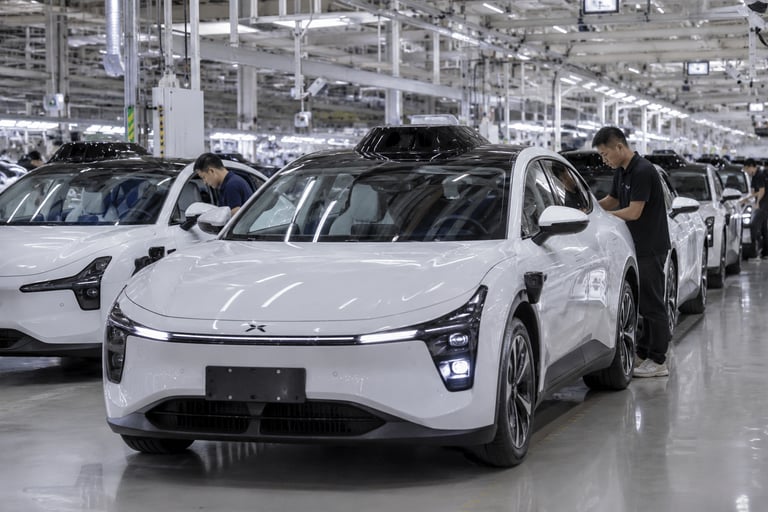

XPeng announced the mass production of its first Robotaxi at its Guangzhou headquarters, with plans to achieve fully driverless operations by early 2027, built on the GX platform with L4 autonomy and powered by four self-developed Turing AI chips delivering about 3,000 TOPS of on-board computing power.
The Robotaxi leverages XPeng’s broader AI and mobility ecosystem, including high-level models like VLA 2.0, and taps into in-house hardware, software, platform, and chassis to shorten the R&D-to-operations cycle.
Analysts and investors warn of risks from safety or regulatory hurdles that could delay commercialization and affect scaling, margins, and供应 chains if suppliers or OEMs struggle to scale autonomy in-house.
Market sentiment has been mixed, with some investors reacting to XPeng’s AI and ecosystem updates, while delivery growth and AI showcases influence sentiment without a uniform stock move.
Analysts note that producing a unit is not the same as deploying a commercial service; real-world pilots, rider trust, and economics still need validation, though vertical integration could offer cost advantages.
XPeng operates as a dual-listed company, trading on the NYSE as XPEV and on the HKEX as 9868, reflecting its international investor base.
XPeng’s product lineup includes the P7, G9, X9, and Mona M03, with ongoing expansion from China into Europe and Australia and exploration of markets like India.
Volkswagen has a notable external collaboration with XPeng, including a stake and recognizing XPeng’s Turing chip and VLA 2.0 as key AI/AV capabilities.
The Robotaxi program envisions a passenger-focused cabin with three variants (5-, 6-, and 7-seat) configured for ride-hailing and premium user experience.
In a challenging market backdrop, XPeng guided 2026 Q1 deliveries and reported 2025 Q4 profit, while rivals face scalability and software issues in other robotaxi programs.
XPeng differentiates itself by sharing the GX platform with consumer vehicles to cut costs and accelerate development, rather than building a stand-alone robotaxi from scratch.
XPeng plans to open its Robotaxi SDK to third-party developers, with Amap as the first global ecosystem partner, signaling an open platform strategy for software and services.
Summary based on 12 sources
Get a daily email with more Startups stories
Sources


Electrek • May 18, 2026
XPeng (XPEV) rolls first mass-produced robotaxi off the line, a China first
Economic Times • May 18, 2026
China's Xpeng begins mass production of robotaxis in Guangzhou