Germany Pushes for Flexibility in EU Combustion Engine Ban, Prioritizes Jobs and Market Protection
April 13, 2026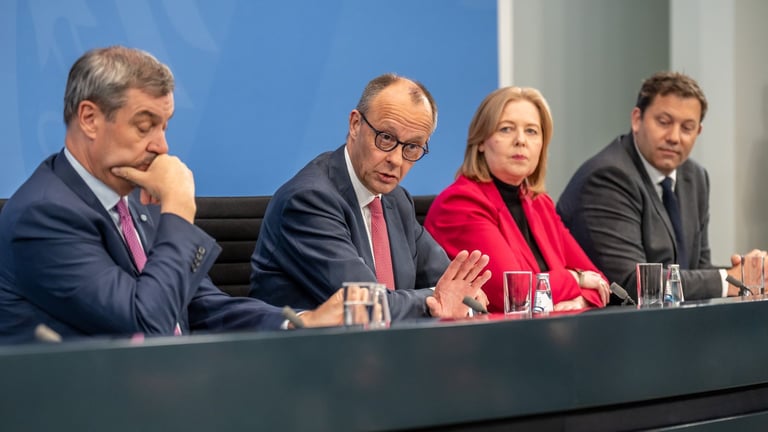


Chancellor Friedrich Merz announces that Germany will enter Brussels negotiations with a strong, cohesive position and openness to energy options regarding the phase-out of combustion engines.
The governing coalition reiterates a unified approach to the EU talks on loosening the ICE ban, aiming for flexibility in Brussels while protecting industrial jobs.
Berlin emphasizes that protecting jobs and suppliers must come first, while warning against letting China capture an outsized share of the European market.
Germany rejects a unilateral vote in Brussels and presses for flexibility to protect the EU internal market, safeguard jobs and the supplier sector, while keeping the door open to supporting electric vehicles as part of a broader energy and transport policy.
Bavaria’s Markus Söder warns that relaxing the stance would be a major setback for Germany, reinforcing the need to shield jobs and the supplier industry, even as SPD leader and Finance Minister Lars Klingbeil calls for more flexibility to bolster the EU internal market and EV support.
The EU Council is expected to vote in June on the final package after the European Parliament approves its stance on the combustion engine phase-out.
Germany urges delaying the proposed tightening of the utility factor for plug-in hybrids from 2027, arguing it would affect climate and fleet targets.
The EU Commission proposes allowing new-vehicle registrations with combustion engines beyond 2035, potentially with up to a 90% CO2 reduction relative to 2021 as a concession.
In another concession, the Commission suggests preserving some combustion-engine usage after 2035 by permitting exemptions tied to up to 90% CO2 reductions compared with 2021.
Germany pushes to count renewable and advanced biofuels as zero-emission in fleet regulations and to keep plug-in hybrids and range-extended vehicles permitted.
CDU/CSU and SPD advocate immediate recognition of zero-emission vehicles powered by renewable fuels or advanced biofuels within fleet rules, while preserving plug-in hybrids and range extenders, and pausing the tightening of the Utility Factor from 2027.
The CDU/CSU-SPD coalition has agreed on a unified, energy-open stance for EU negotiations over relaxing the ban on internal combustion engines, signaling readiness to engage Brussels with a cohesive position.
Summary based on 2 sources