Chinese EVs Set Sights on U.S. Markets by 2030 Through Strategic North American Partnerships
June 6, 2026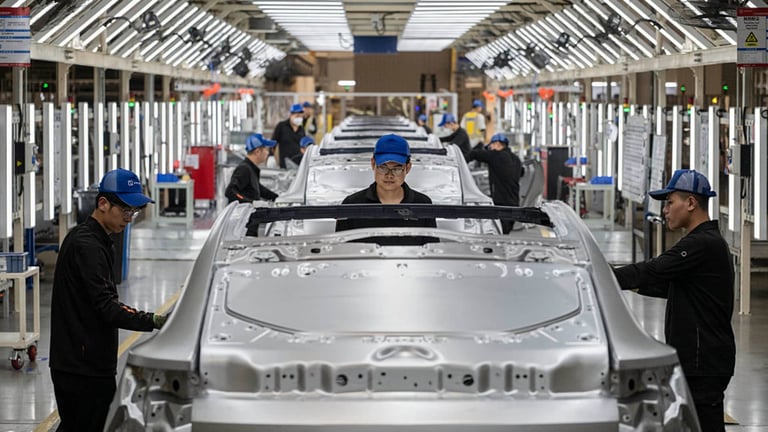

China-made EVs face a 125% cumulative U.S. tariff and potential Senate bans, creating significant regulatory barriers.
U.S. automakers—GM, Ford, and Stellantis—face an existential shift as electrification accelerates and they struggle to match China’s scale and pricing.
Policy and market dynamics include a bipartisan Senate ban proposal, restrictions on Chinese software in connected vehicles, and ongoing USMCA content discussions that shape the Chinese EV competitive landscape.
Tariffs, USMCA content requirements, and proposed new tariffs tied to forced labor concerns complicate any pathway for Chinese-made vehicles to be sold in the U.S.
China accounted for roughly 75% of global EV manufacturing and about 40% of global EV trade in 2025, with exports near 2.5 million vehicles as production outpaced domestic demand.
China’s EV leadership is underpinned by high export volumes and a dominant share of production, with BYD, Geely, and others driving the export machine.
Public interest remains strong, with many U.S. consumers open to Chinese EVs if regulatory and price barriers can be overcome.
Major U.S. automakers maintain or deepen ties with Chinese producers—Ford with Geely, GM with CATL battery cells, and Stellantis with Leapmotor and North American partnerships.
Despite regulatory and tariff hurdles, Chinese EVs are expanding entry routes into the U.S. through Canada, Mexico, and partnerships with Detroit automakers, signaling a path to U.S. sales by around 2030.
Industry voices expect Chinese cars to appear on U.S. roads by roughly 2030, often via collaborations or phased market entry rather than immediate, wholesale imports.
Paths to U.S. entry include manufacturing in the United States or forming joint ventures with American firms, rather than direct imports.
Geely leverages Volvo plants to maintain a footprint in Europe and the U.S., enabling potential production for brands like Zeekr and integration with robotaxi platforms.
Summary based on 2 sources
Get a daily email with more Tech stories
Sources

The Next Web • Jun 6, 2026
Chinese EVs are circling the US market. Detroit’s best option may be to partner with them.
CNBC • Jun 6, 2026
Chinese EVs may hit U.S. within a few years, one way or another