Morocco Set to Become Africa's Green Tech Hub with $1.3 Billion Battery Plant
July 24, 2026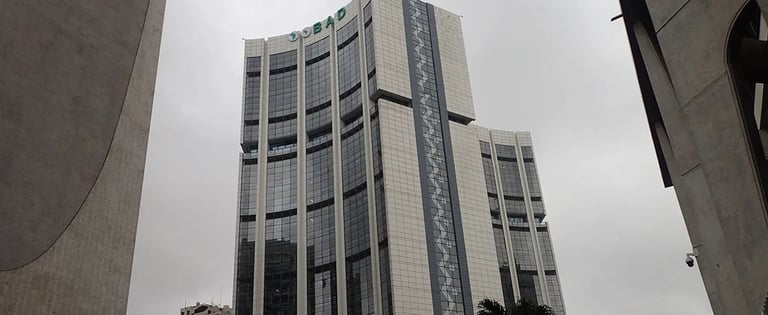


The article references events around the publication date, though the exact date is not specified.
The project aims to produce 10 GWh of battery cells and packs in Phase 1, with plans to expand to 100 GWh, positioning Morocco as a hub for sustainable mobility and green technology value chains in Africa.
The AfDB’s broader objective is to promote industrialisation, regional integration, and value addition to Africa’s natural resources, boosting Africa’s competitiveness in global EV supply chains.
Key stakeholders include Gotion High-Tech Co. Ltd. as the project lead, with international leadership from a Chinese battery manufacturer listed on the Shenzhen Stock Exchange, and AfDB VP Kevin Kariuki underscoring the project’s role in renewable energy integration and low-carbon energy.
Morocco already hosts over 250 automotive and components companies, including Stellantis and Renault, with a diverse array of international manufacturers contributing to the sector.
The project requires about $1.3 billion in total investment to build an integrated lithium iron phosphate battery plant capable of producing cathodes, anodes, and cells.
AfDB plans to mobilize up to €141 million from development partners as lead arranger under the New African Financial Architecture for Development initiative.
The project is developed by China’s Gotion High-Tech and aims to mobilize up to €141 million from development finance partners as lead arranger.
AfDB aims to mobilize up to $160 million in additional financing from development partners to support the project.
Upon completion, a large portion of output is planned for export to Europe, signaling an advancement up the value chain from raw materials.
The factory will produce lithium iron phosphate cells, as well as cathodes and anodes, forming an integrated production chain to reduce reliance on imported components.
In the first phase, more than 600 direct jobs will be created and local industrial integration is projected to reach about 70%, supporting domestic manufacturing and skills development.
Summary based on 8 sources
Get a daily email with more World News stories
Sources

Yahoo! Finance • Jul 24, 2026
Morocco secures $114 million in funding for Africa’s first EV battery factory
The Washington Post • Jul 24, 2026
Morocco secures $114 million in funding for Africa’s first EV battery factory
Business Insider Africa • Jul 24, 2026
Chinese battery giant wins AfDB backing for Africa’s first gigafactory in Morocco
Construction Review • Jul 24, 2026
$1.3bn Morocco Battery Gigafactory: AfDB Approves $114M Loan Towards Africa’s LFP Battery Plant