Waymo Launches Ojai: A Groundbreaking Robotaxi with Enhanced Accessibility and Safety Features
May 28, 2026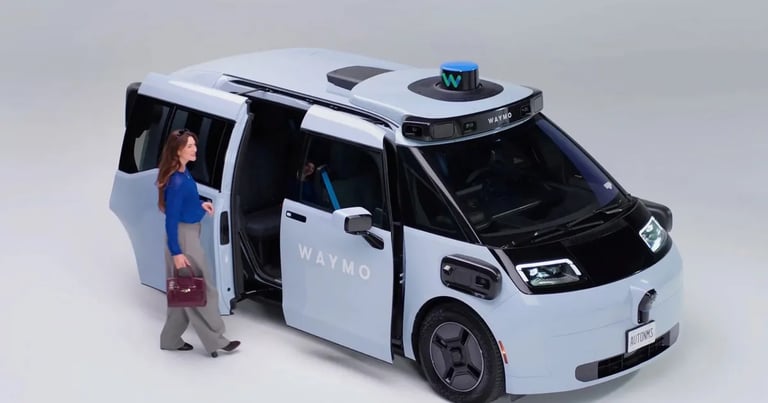


Waymo unveils the Ojai, its first purpose-built robotaxi designed from the ground up for rider experience and accessibility, built on Zeekr’s platform with Waymo hardware in an Arizona facility, featuring a spacious cabin, three rear passenger screens, multiple charging ports, cup holders, flat floor, low step-in height, braille markings, grab bars, and other accessibility touches.
Initial free-rides rollout will target select users in Los Angeles, Phoenix, and San Francisco, with expansion planned to Denver, Las Vegas, and San Diego; New York and Boston are not included in the first wave.
Ojai runs on Waymo’s 6th-generation Driver, anticipated to perform better in snowy conditions and to lower overall sensor counts while boosting capability.
Regulatory and political tensions around Chinese-made auto tech persist in the U.S., including debates over safety and security and a potential 2027 ban on certain foreign-connected tech.
Waymo paused freeway rides and recalled thousands of vehicles amid safety and flooding-related concerns, as the company works to fix bugs with the new system.
Earlier this month, Waymo halted operations in two cities over flooded-road incidents and recalled roughly 4,000 cars after safety issues, including incidents where vehicles failed to stop for school buses.
The pauses follow broader reliability challenges, including construction-zone behavior and flooding, which Waymo is addressing as it pursues expansion.
Waymo asserts its Driver yields dramatically fewer serious crashes than human drivers, claiming a 92% reduction under similar conditions and a 13x lower rate of serious injury or fatal crashes.
The 6th-gen Driver reduces sensor count by about 42%—from 29 cameras to 13, five lidars to four, and fewer radars—while aiming for a unit cost under $20,000 to support scalable economics.
Ojai uses the 6th-generation software with a leaner sensor suite, achieving cost efficiency and improved integration.
The Ojai platform is Zeekr-based, reflecting Geely collaboration, with Waymo hardware and software integrated into a production-intent minivan designed around Zeekr’s SEA-M architecture.
Interior highlights include a music/climate control touchscreen, customer support features, and a weather-resilient sensor suite with a small rain/snow wiper for navigation.
Summary based on 10 sources
Get a daily email with more US News stories
Sources

TechCrunch • May 28, 2026
Waymo’s newest robotaxi is Chinese-made, built to make money, and now accepting riders
Mashable • May 28, 2026
Waymo touts ‘elevator-like’ doors, ‘living room’ feel on new vehicles
Electrek • May 28, 2026
Waymo starts offering rides in new Ojai robotaxi with 6th-gen Driver
CNET • May 28, 2026
Inside Waymo's New Ojai Robotaxi: More Space, Sliding Doors and Smarter AI