BMW Unveils 2026 iX3: A Landmark in Electric SUV Innovation with 805 km Range and Cutting-Edge Tech
December 4, 2025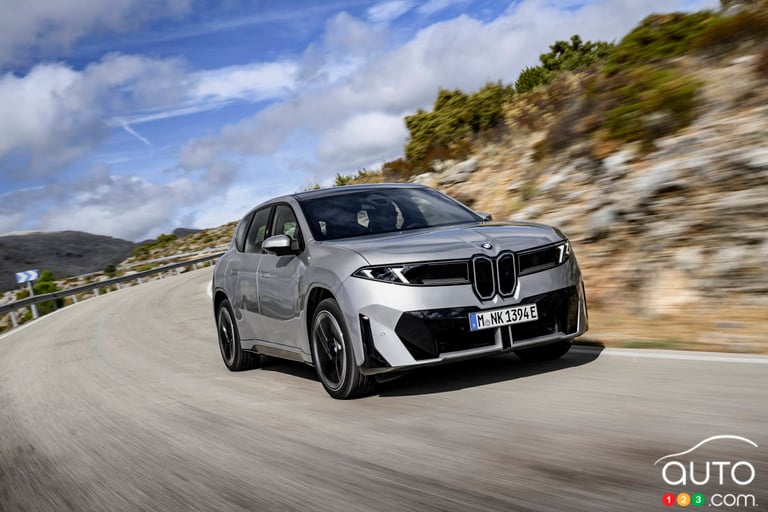


The iX3 introduces a ground-up battery and motor layout with a software-defined system called Heart of Joy and a regenerative braking approach that aims to minimize friction braking for efficiency.
In the Australian market, the iX3 will face pricing and availability considerations alongside rivals, underscoring BMW’s push in the premium EV-SUV segment.
All-wheel-drive 50 xDrive delivers 469 hp with refined steering and braking; the ride is firm with capable damping, though regen adjustments live in deeper menus.
Australia will not get alternative battery/motor versions until early 2027, including the iX3 40 RWD and potential iX3 M variants.
Overall, the iX3 blends long-range capability, performance, and Neue Klasse tech, while presenting a software learning curve and pricing/spec questions at launch.
On the road, the iX3 delivers quiet, comfortable rear seating and a blend of Neue Klasse heritage with modern innovations like a large windscreen display and panoramic interior.
Range guidance suggests a 600 km WLTP for a smaller single-motor iX3 versus up to 805 km for the 50 xDrive, highlighting the impact of configuration on range.
BMW emphasizes a highly regenerative braking system, advanced driving dynamics, and improved steering feel to maintain the 'joy of driving' ethos despite higher EV weight.
Pricing for the iX3 starts around €73,925 for the 50 xDrive, with strong standard equipment and competitive positioning against rivals.
Design highlights include a Vision Neue Klasse-inspired interior with a 110 cm Panoramic iDrive projection, a 17.9-inch screen, recycled materials, and 520 L of cargo space (1,750 L with folded rear).
BMW introduces the 2026 iX3 on the Neue Klasse platform, promising up to 805 km range, rapid charging, and a potential tipping point for electric motoring as a premium, family-friendly SUV that sits alongside petrol and hybrid X3 models.
The iX3 is touted as BMW’s most important car in two decades, marking a significant leap in design and EV engineering within Neue Klasse, with a focus on premium comfort and practicality for families.
Historically, the iX3 arrives on a new platform that succeeds the 2021 iX3, signaling a major technological leap under the Neue Klasse umbrella.
The driving experience is refined, offering a balanced suspension, precise steering, and a mix of luxury and performance; Sport mode channels a rear-drive feel while Personal mode emphasizes safety and stability.
Ride and handling deliver a composed, motorway-friendly, sophisticated feel with excellent visibility and parking aids, rather than a pure performance focus.
Launch options in Australia may include adaptive suspension and run-flat tires to reduce reliance on a traditional spare.
Dimensions and colors: approximately 4,782 mm long, 1,895 mm wide (mirrors folded), 1,635 mm high; available in one solid and five metallic paints with nuanced pricing.
Pricing guidance places the base around $60,000, with standard features including adaptive cruise control with lane change, a parking/app integration, and reliable charging/navigation assistance.
Interior shifts to a Panoramic display system featuring a 17.9-inch driver-oriented touchscreen and windshield display, with the MyBMW app for trip planning, charging stops, and remote parking, plus AI-powered charging location learning.
The cabin centers on a Panoramic iDrive interface that blends windshield screens with the large touchscreen, supported by physical controls and voice commands for drive modes and functions.
The interior emphasizes a futuristic but practical layout with a 55 mm tall Panoramic Vision screen, and the MyBMW app enhancing planning and charging efficiency.
Real-world testing showed about 549 km range on a 258-km trip, with energy consumption around 16.4 kWh/100 km, aligning closely with official figures.
Charging infrastructure includes 400 kW capability in some markets like Ireland; home charging times vary and may improve with higher-power setups.
Practical storage includes a 520 L boot (1,750 L with rear seats folded) and a 58 L front trunk, with modest cabin storage and no spare wheel, while cargo space and rear seat comfort are adequate but not lavish.
Front-seat adjustability is limited, rear space is decent, and the vehicle can tow up to 2,000 kg; overall comfort and practicality are strong but not class-leading in space.
Regenerative braking offers multiple levels, including a strong B mode for one-pedal driving efficiency.
The iX3 features advanced driver assistance with Assisted Driving Pro (Europe) and Assisted Driving Classic (Australia), integrated across four onboard computers.
BMW’s app enables route planning, charging cost projections, and station reviews; AC charging up to 15.4 kW with bidirectional power across US models.
Chassis notes indicate a firm ride with standard springs and dampers, with potential for adaptive components in future Neue Klasse models.
Driving dynamics are described as exceptionally smooth and composed, aided by BMW’s Heart of Joy computing system, with strong stability despite a substantial mass.
Neue Klasse exterior styling features include a black glazed front mask, dual upright kidneys on SUVs, flush door handles, and a spacious 520 L boot with underfloor storage plus a 58 L frunk for cables.
Performance variants are anticipated, including an iX3 M with potential quad-motor setup and aggressive styling, evidenced by a camouflaged test mule at the Nürburgring.
Charging and energy tech include V2L capability for home use and a driving-assist suite with enhanced lane-change cues and parking control via the MyBMW app.
Fast charging claims include up to 372 km range recovered in about 10 minutes (around 400 kW), with a standard NACS port, plug-and-charge, and EPA range estimates exceeding 650 km; Canada lacks 400 kW chargers at launch.
Pros and cons note a strong range and dynamic handling but a firm ride, hard seats, and a complex infotainment system.
Preliminary specs cite 469 hp, 479 lb-ft torque, 5,038 lb curb weight, 18.4–61.8 cu ft cargo space, 0–60 mph in about 4.7 seconds, and up to 400 kW charging via NACS.
The iX3 emphasizes comfort with generous rear space and cargo capacity, plus features like four-zone climate control and premium audio and panoramic glass roof.
Overall impressions praise strong driving dynamics, impressive range and charging, and a stylish interior, with minor downsides such as a chatty voice assistant and some regen mode complexity.
Canadian pricing and full specs will be announced closer to the mid-2026 launch, signaling regional pricing strategy.
The iX3 employs a dual-motor setup (front and rear), with a large battery and a brisk 0–60 mph time, aiming for strong performance while leveraging rear-drive tendencies in normal driving.
Powertrain delivers around 463 hp and 476 lb-ft with a rear-driven bias, enhanced by a 50 xDrive configuration for confident on-road dynamics.
Performance-focused variants—including an iX3 M and potential high-performance models—are anticipated, teased by camouflaged test mules and planned cooling and styling upgrades.
Australian availability begins mid-2026 for right-hand-drive models, with initial pricing around AUD 120,000 for the iX3 50 xDrive, positioning it competitively in its segment.
Safety and driver aids are strong, with optional Motorway & City Assistant, though there can be occasional overreliance on front-vehicle cues and system underperformance risk.
Despite a heavy curb weight, the iX3 maintains balanced ride and handling with regular springs, and optional adaptive suspension may not be essential.
Exterior design leans toward a cleaner Neue Klasse aesthetic with smaller grilles, LED lighting, flush door handles, and a nod to BMW’s heritage.
Ownership benefits include a five-year unlimited-kilometer warranty and an eight-year/160,000 km battery warranty, with potential V2L/V2H/V2G capabilities planned for Australia.
Design and pricing notes suggest a bold, initially polarizing look with a starting price near $60,000, likely higher than a base gasoline X3, influencing buyer decisions amid EV incentives.
Rivals in the premium EV SUV space include Audi Q6 e-tron, Porsche Macan, Polestar 3, Cadillac Lyriq, Genesis GV70 Electrified, and Mercedes GLC with EQ tech.
verdict: the iX3 stands as a top contender in the premium EV-SUV segment due to range, fast charging, and engaging drive, highlighted by the Panoramic Vision dashboard and near-800 km real-world range.
Summary based on 10 sources
Get a daily email with more Tech stories
Sources
The Verge • Dec 3, 2025
BMW iX3 first drive: a ‘New Class’ is in session
Ars Technica • Dec 3, 2025
Great handling, advanced EV tech: We drive the 2027 BMW iX3
The Globe and Mail • Dec 3, 2025
BMW takes a big step forward with the all-electric iX3, the first of its Neue Klasse vehicles
The Drive • Dec 3, 2025
2027 BMW iX3 First Drive Review: Better Than BMW’s Best