Chinese EV Makers Expand in Developing Markets Amid Fuel Price Surge, Infrastructure Challenges
June 22, 2026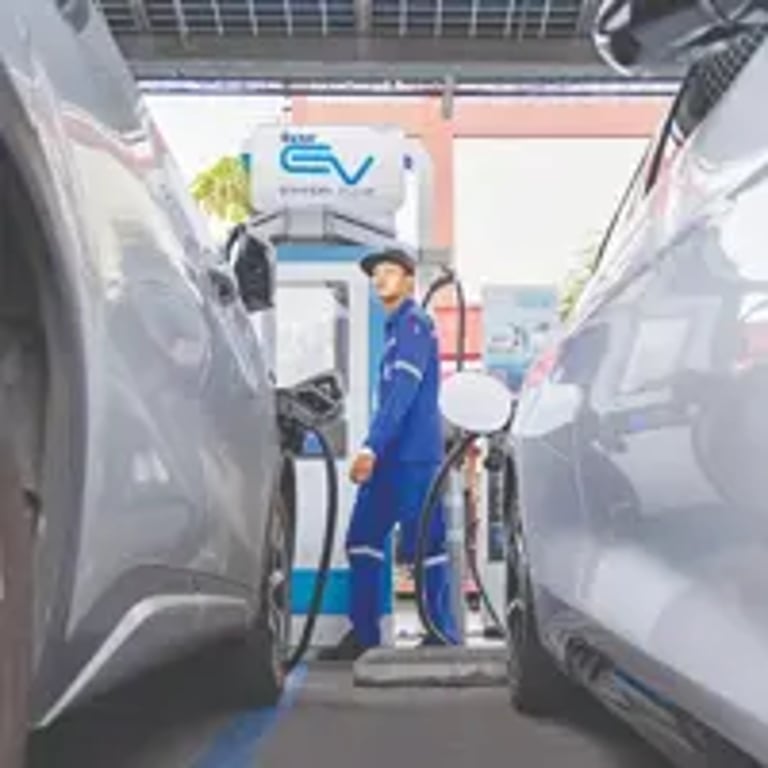


Chinese EV makers are expanding into developing markets as higher fuel prices spur adoption, but charging networks lag behind imports, creating a dependence on policy support and infrastructure rollouts.
A strategic playbook recommends OEMs partner with state utilities to deploy decentralized energy storage at high-throughput hubs, utilities adopt time-of-use tariffs and dynamic pricing to shift charging, and V2X tech could let fleets act as distributed energy storage for grid stability.
Thailand, Laos, Vietnam, Indonesia, and Ethiopia illustrate varied progress: Thailand has around 4,600 public charging sites serving over 424,000 EVs and leans on policy incentives to expand charging; Ethiopia has just a dozen stations mid-2025 but plans a major expansion; Indonesia has more than 4,500 public chargers deployed by PLN; Africa hosts roughly 2,000 public chargers, dominated by South Africa, with Kenya planning to add 44 stations in the next year.
Infrastructure bottlenecks include grid reliability, maintenance, and the need for coordinated planning between utilities and automakers to support growing EV fleets.
DC Fast Charging and ultra-fast charging raise instantaneous load, stressing transformers and requiring grid reinforcement or mitigation measures.
A Charging Network Tipping Point Matrix shows private charger operators need high utilization to amortize costs while visible charging infrastructure fuels mass adoption, creating a deployment paradox with typical 12–24 month lead times for high-power deployments.
Two infrastructure bottlenecks are upfront generation constraints vulnerable to blockades and last-mile distribution limits where substation transformers and feeders hit thermal limits under heavy DC fast charging.
A Total Cost of Ownership model indicates that when oil prices surpass $100 per barrel, the operating-cost gap between ICE vehicles and EVs widens, making EVs more financially attractive for individuals and fleets in developing markets.
Overall, the ICE-to-EV transition in developing markets is now largely an economic and infrastructural reality driven by price signals and supply-chain dynamics, favoring players that integrate scalable vehicle supply with resilient, decentralized grid solutions.
Anecdotes from users, such as Hanoi’s Nguyen Thien Bao and Thai drivers, illustrate real-world cost savings and the practical charging challenges of switching to EVs.
Higher fuel prices boost EV attractiveness for households facing volatile oil costs, fueling adoption trends in low- and middle-income economies.
Developing nations face grid capacity bottlenecks as new EV demand shifts load onto domestic power systems, potentially relying on oil- or gas-fired generation and necessitating grid upgrades beyond vehicle efficiency gains.
Summary based on 9 sources
Get a daily email with more Macroeconomics stories
Sources

AP News • Jun 22, 2026
Chinese EVs make inroads in developing countries, but charging networks lag | AP News

Hürriyet Daily News • Jun 22, 2026
Chinese EVs boom in developing markets, but charging networks lag - Latest News