California's EV Boom Faces Charging Challenges and New Incentives Amid Growing Adoption
September 21, 2026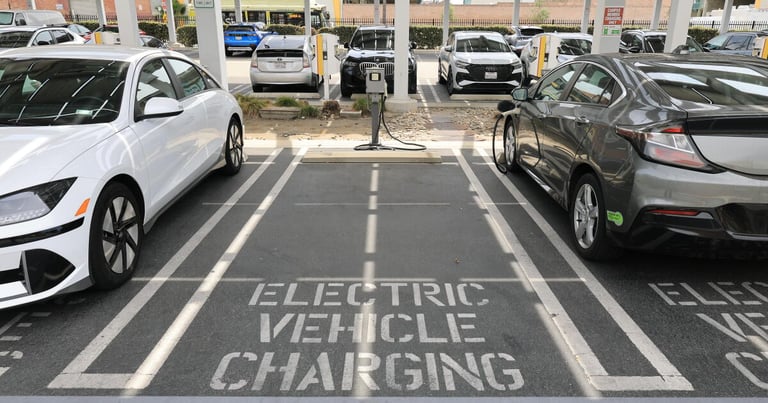


EV ownership elicits mixed reader experiences: some praise quieter rides, quick acceleration, and lower fuel costs, while others fear outages, higher electricity costs, and limited service or charging dependability in certain regions.
In the Los Angeles Times Essential California newsletter, readers report lower fuel costs and quieter driving, yet express concerns about outages, apartment charging expenses, and a sparse charging/service infrastructure.
Real-world reports show that while some households see easier maintenance and savings, others confront power outages, apartment charging costs, limited local repair options, and range anxiety as barriers.
California Governor Newsom has signed measures to streamline permitting for charging infrastructure projects to accelerate the expansion of charging availability.
Legislation also focuses on reducing red tape for charging projects and continuing incentives aimed at lowering the purchase barrier, particularly for drivers who can charging at home or via solar.
State actions include streamlined permitting for charging projects and targeted incentives designed to make EVs more affordable, while noting ongoing gaps in access, especially for lower-income communities.
A new round of incentives offers immediate discounts of $3,500 on new EVs and $1,750 on used ones, avoiding the need to wait for federal credits later.
Rising gasoline prices are cited as a factor making EVs more financially attractive, reinforcing the incentive narrative.
California is seeing growing EV use, with about one in six new-car sales being fully electric and roughly one in twelve total vehicles on the road being zero-emission.
Reader-reported data from the Essential California newsletter indicates similar figures: approximately one in twelve cars on California roads are zero-pollution models, and about one in six new cars sold are fully electric.
EVs are valued for savings, quiet operation, and home charging convenience, contributing to rising adoption alongside the state’s stated shares of EV adoption.
Despite benefits, practical barriers such as charging availability, repair options, and reliability must be addressed to broaden EV adoption.
Summary based on 3 sources
Get a daily email with more US News stories
Sources
Los Angeles Times • Sep 21, 2026
Essential California readers share their real-world EV experiences - Los Angeles Times